-
By weeklysift on August 3, 2026
Good short- and medium-term political news has emboldened some writers to remind us of the longer-term bad news.
The good news is that polls for the fall elections keep looking better. The unpopular and unpromising Iran War, Trump’s tariffs, the continuing inflation that the war and the tariffs make worse, ICE’s repeated acts of unjustified and illegal violence, the regime’s increasingly blatant corruption, the undying plan to reward Trump’s January 6 cop-beaters, and the Mad King’s obsession with his past defeats and continuing vanity projects (ballroom, arch, reflecting pool, coin, and putting his name on train stations, airports, bridges, investment accounts, drug plans, a peace institute, and a performance space) that do nothing to improve voters’ lives — it’s starting to add up.
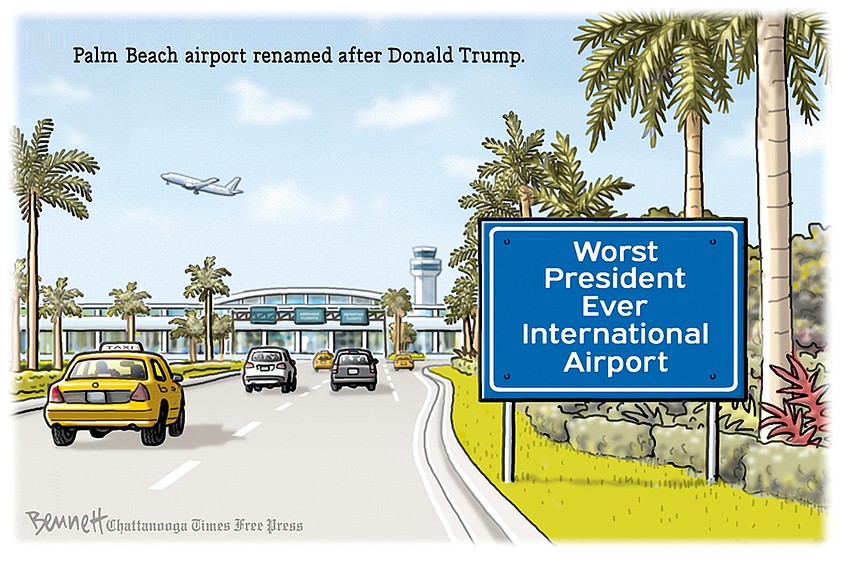
Trump’s approval rating is at its lowest point ever — lower than after January 6, even. Quinnipiac has him at 32% approval versus 58% disapproval, which includes 52% strong disapproval. (Strong disapproval over 50% seems to be exceedingly rare. Nixon appears to have topped out at 48% strong disapproval, while George W. Bush hit 51%. Trump may be setting records here, with strong disapproval like nobody has ever seen before.) And that’s transferring to Republican candidates: The Democratic lead in the generic congressional poll is now at 11% in the Emerson College poll, which is a bit of an outlier. But every major recent poll has Democrats up at least 2%, with an average of 6.4%.
Polls about individual issues have Trump underwater across the board. And what seems likely to turn around between now and November? Will he win the Iran War? Wow us with some completed vanity project that makes us forget our problems? More likely, low-information voters who generally have liked Trump in the past will start to tune in before the election and say, “What? Is that still a problem? He’s in favor of what? He made how much money since getting elected again?”
Of course polling isn’t perfect and things can always change, but I’m finding this convincing: The fall elections are looking good.
So what’s looking bad? Money, to start with. Elon Musk by himself spent over $300 million to elect Republicans (mostly Trump) in 2024, and that turned out to be a profitable investment. He bought himself new government contracts, massive quantities of government data about people like you, and protection against government investigations. He’s talking about spending $100 million this fall, and that’s probably a lowball estimate.
Now, maybe he’ll waste all that money, the way he wasted $21 million on a Wisconsin Supreme Court race that his candidate lost by double digits. In that race, Musk himself campaigned, and his money became an issue that worked against his candidate.
But what if he’s smarter this time around? He says he’s funding get-out-the-vote efforts. What if those efforts include making deep-fake videos of Democratic candidates and distributing them via targeted social-media advertising? This fall, you may not even know the lies that motivate your neighbor to get out and vote Republican.
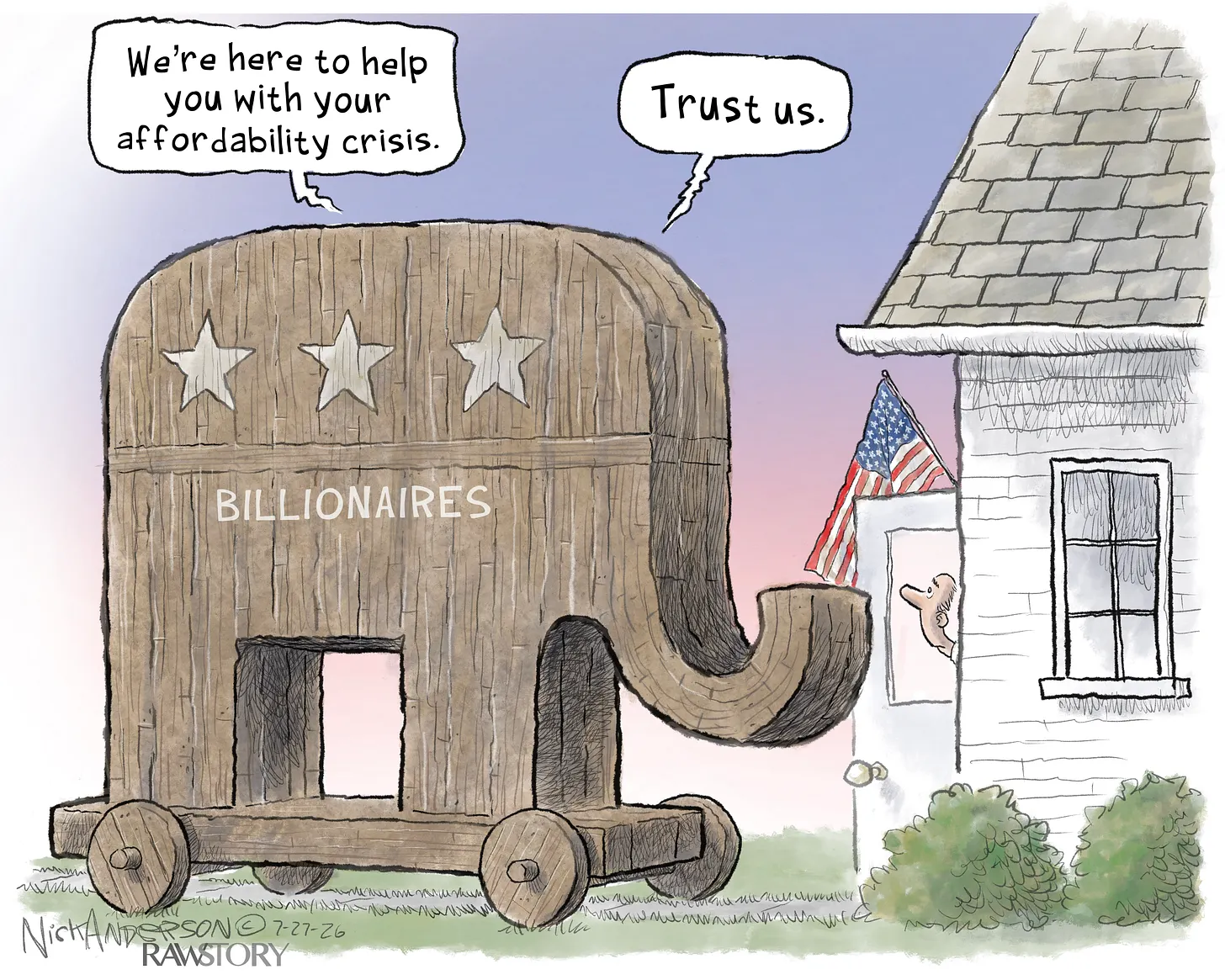
But the long-term bad news runs deeper than that, as articles by John F. Terzano and Jason Sattler point out. Basically, they are two points of view on the same unsettling story: Over decades, conservatives have built a political, legal, intellectual, and media infrastructure that is well suited to the way power actually works in the United States. That integrated power-seeking and power-wielding system can survive one or two bad elections and quickly re-assert itself. Terzano sums up what began happening after Barry Goldwater’s landslide loss to Lyndon Johnson in 1964:
Conservatives learned to focus on something much larger than just presidential elections: the institutions that develop and preserve ideas, cultivate future leaders, and sustain political movements across generations. That requires the long-term work of building power from the ground up. It requires discipline, persistence, and a willingness to invest in institutions whose greatest influence may not be realized for decades.
An example of how this now works is the way the Right bounced back from the disasters of the second Bush administration. By the time he left office, George W. Bush had over-50% strong disapproval, just like Trump does. The combination of unwinnable wars and the worst economic disaster since the Great Depression led his party to massive defeats in 2006 and 2008. By the time Obama took office in 2009, he had not just a landslide victory himself, but a filibuster-proof 60-vote majority in the Senate (though Republican legal shenanigans prevented the 60th senator from taking office until the next summer; Obama’s filibuster protection only lasted until Democrats lost Ted Kennedy’s seat the next January).
After that, you might have expected the GOP to spend a couple of election cycles soul-searching and remaking itself, perhaps looking for its own Obama. Instead, it rebranded almost instantly in the Tea Party. Republicans flipped 63 seats in the House in 2010, taking a majority that Obama had to deal with for the rest of his presidency. Almost instantly, the party of tax-cuts-for-the-rich (that didn’t change) had new faces, new slogans, and zero responsibility for anything W had done.
During his brief season of living beyond the reach of the filibuster, Obama did not transform the country or create a new political paradigm. By 2016, Trump represented the rebellion against Bushism (though he still wanted to cut rich people’s taxes). He likewise proved horribly unpopular and lost resoundingly in 2020, ending his term with a failed coup that should have sent him to jail.
But again, the GOP turned on a dime. Trump was back in 2024 and had a clear plan — Project 2025 — for the march towards autocracy that we are seeing now.
More than just elections, conservatives have managed to rewrite the Constitution without anyone voting for the changes. A combination of luck and political hardball has given them a radically partisan 6-3 majority on the Supreme Court, despite holding the presidency for about the same amount of time as Democrats since 1992 — and only because their candidates won in 2000 and 2016 with fewer votes than their Democratic opponents.
Repealing Roe v Wade happened with much political attention. But consider these other constitutional rewrites:
- The unitary executive theory, which was a fringe idea prior to the 1980s, is now in the Constitution. So all the independent agencies Congress created over the decades have lost their independence, and civil service protections are now suspect.
- Presidential immunity is in the Constitution now.
- Political contributions are now a form of speech, so virtually any limit on money in politics is now unconstitutional. And corporations have the same freedom of political speech that you do.
- The “well regulated militia” clause of the Second Amendment is now meaningless, and the Amendment defines an individual right that did not exist prior to 2008.
- Virtually every provision of the Voting Rights Act is now unenforceable.
- The insurrection clause of the 14th Amendment is now meaningless.
Amending the Constitution requires a 2/3 vote in Congress and ratification from 3/4 of the states. Do you remember any of that happening with these changes?
Sattler focuses on the media empire the Right has built, with its ability to create new narratives and new issues in virtually no time at all. Everyone understands the role Fox News plays, but most of us don’t appreciate the breadth of the right-wing media machine: Elon Musk’s X is now rigged to promote and distribute right-wing hate while disclaiming any responsibility for it; Meta is becoming a slightly-less-toxic version of X; CBS is remaking itself as a slightly-less-explicit version of Fox; Sinclair puts national messages into the mouths of local broadcasters, as if they thought of this themselves; AM talk radio has not changed since the Rush Limbaugh era; and social media is seeded with small-scale right-wing influencers, some of whom grow into national brands themselves. This combination of diversity and integration allows for experimentation with different messages and framing, together with quick coalescing around whichever new thing works.
The media machine explains how Ken Paxton can ride out his scandals while Graham Platner could not; how “issues” from Obama’s birth certificate to illegal-immigrants-voting can be created from nothing; why the small-scale corruption of Hunter Biden was a much bigger story than the large-scale corruption of Eric and Don Jr.; and so on.
Terzano focuses more on the institutional structure of organizations like the Heritage Foundation and the Federalist Society. Democrats can manage to fund candidates once they begin to catch on, the way James Talerico is raising money now or Bernie Sanders did for his presidential runs. But Republicans have the political equivalent of venture capital: Money is waiting around for start-ups it can fund, like Moms for Liberty, Turning Point USA, or the early Tea Party groups. If you are a conservative with a promising idea, you will not go begging.
The number and wealth of conservative organizations provides career paths that young liberals can only dream about. Young conservative journalists, lawyers, influencers, activists, or candidates are groomed and tracked in ways that liberals are not. (Believe me, I’ve watched young liberal political science graduates try to navigate their sparse options.)
Ideas change minds; institutions change history. This became a defining tenet of the modern conservative movement. Leadership pipelines ensure that today’s school board member becomes tomorrow’s legislator, who becomes governor or attorney general. Today’s young lawyer becomes tomorrow’s appellate judge, and someday a Supreme Court justice.
The upshot of all this is that pro-democracy forces can’t relax, even if they retake Congress this fall and the presidency in 2028. The movement that made Donald Trump and John Roberts and Paul Ryan and Charlie Kirk will not be defeated so easily. There will be new faces, new slogans, and new issues almost immediately. And the right-wing media empire will scoff at the idea that any of these new voices should have to answer for the mistakes and crimes of Donald Trump. They will suddenly discover that Trump, like W before him, was never really a conservative. The new voices will be the true conservatives, the authentic representatives of the great American people.
And they’ll still be cutting billionaires’ taxes.


The Weekly Sift © 2026.

Get the Jetpack app
Subscribe, bookmark, and get real-time notifications – all from one app!


Automattic, Inc.
60 29th St. #343, San Francisco, CA 94110


Subscribe to:
Post Comments (Atom)

 Posts
Posts


No comments:
Post a Comment