Saturday, June 26, 2021

ANS -- HCR June 25, 2021 (Friday)

Another from Heather Cox Richardson.  She does such great summaries of what is going on!  As she says, "Lots of legal news today."
--Kim


June 25, 2021 (Friday)
Lots of legal news today.
In Minnesota, Judge Peter Cahill sentenced former police officer Derek Chauvin to 22.5 years in prison for the murder of George Floyd in Minneapolis, Minnesota, in May 2020. Last April, a jury convicted Chauvin of second-degree unintentional murder, third-degree murder, and second-degree manslaughter. Floyd's death sparked protests across the country last summer.
Elie Mystal, justice correspondent at The Nation, noted that Chavin was going to get at least ten years. Prosecutors asked for 30. The Judge split the difference and added in time for the aggravating factors. Legal analyst and law school professor Joyce Alene White Vance noted that keeping the sentencing in the same realm as other sentences for felony murder make it less likely to be overturned on appeal.
This morning, Georgia Superior Court Judge Brian Amero dismissed seven of the nine claims in a lawsuit alleging there were 147,000 fraudulent ballots cast in Fulton County in the 2020 election. He did not dismiss two of them, which were argued under a different claim. The Fulton County elections board says it intends to file to get those claims dismissed as well. There have already been three audits of the ballots, including a hand recount. Those audits found no evidence of widespread fraud.
Georgia is in the news for another legal case today, as well. Attorney General Merrick Garland announced that the Department of Justice is suing the state of Georgia over its sweeping new election bill that restricts access to the vote. In a press conference, Garland said that the new law was not discriminatory against Black voters by accident; it was intended to be discriminatory.
"Our complaint alleges that recent changes to Georgia's election laws were enacted with the purpose of denying or abridging the right of Black Georgians to vote on account of their race or color, in violation of Section 2 of the Voting Rights Act," he said.
In a statement, Georgia Secretary of State Brad Raffensperger said: ""The Biden Administration continues to do the bidding of Stacey Abrams and spreads more lies about Georgia's election law…. I look forward to meeting them, and beating them, in court." Georgia governor Brian Kemp, whose victory over Stacey Abrams in the 2018 election has been widely associated with voter suppression, accused the Biden administration of "weaponizing the Department of Justice to serve their own partisan goals." He said at a news conference: "the DOJ lawsuit announced today is legally and constitutionally dead wrong. Their false and baseless allegations are, quite honestly, disgusting."
The DOJ also set up a task force to deal with the rise in threats against election workers since the 2020 election. Threats and intimidation have led election officials in Michigan, Pennsylvania, Wisconsin, and Georgia, to quit or retire early. Pennsylvania, alone, has lost about a third of its county election officials.
States passing voter restriction laws have also put in place punishments for county officials who expand voter access. A law in Florida imposes a $25,000 fine for leaving a ballot drop box accessible outside of established hours; another in Iowa imposes a $10,000 fine for a "technical infraction," such as opening a few minutes late. Opponents think these laws could be enforced on a partisan basis. "It's a lot of moving parts and a lot of variables and people make mistakes, and now I'm liable for all those mistakes," Iowa's Linn County auditor Joel Miller told the Associated Press. "The process could be likewise corrupted by the secretary of state arbitrarily administering the law in a very uneven manner, depending on whether you're a Democratic county or a Republican county."
The memo announcing the new task force quoted Attorney Merrick Garland's statement on June 11 when he announced steps the DOJ would take over the next 30 days to protect the right to vote: "There are many things that are open to debate in America. But the right of all eligible citizens to vote is not one of them. The right to vote is the cornerstone of our democracy, the right from which all other rights ultimately flow."
It went on to say: "A threat to any election official, worker, or volunteer is, at bottom, a threat to democracy. We will promptly and vigorously prosecute offenders to protect the rights of American voters, to punish those who engage in this criminal behavior, and to send the unmistakable message that such conduct will not be tolerated."
This is fitting, of course, because Congress established the Department of Justice in 1870, under President U.S. Grant's administration, to keep members of the Ku Klux Klan from continuing to terrorize Black and white Republican voters in the South after the Civil War. Garland has often referred to that history and declared his intention to honor it.
Laws from that era are in the news in another way today, too. The bus driver and staffers who were on the Biden-Harris campaign bus that a caravan of about 100 trucks full of Trump supporters tried to drive off the highway last October are suing several people from the caravan under the 1871 Ku Klux Klan Act. That law, passed at the height of KKK terrorism in the Reconstruction South, made election intimidation a crime. The group is also suing local law enforcement for refusing to come to their aid despite their frantic phone calls to 911.
The Biden-Harris campaign cancelled its events for the day out of safety concerns. Participants in the "train" announced their intentions on social media, filmed their actions, and then bragged about them after the fact, prompting Florida Senator Marco Rubio, Donald Trump Jr., and Trump himself to cheer them on.
Finally, news broke today that yesterday, prosecutors for the Manhattan district attorney told lawyers for the Trump Organization that they could bring criminal charges against the company as soon as next week over tax issues. The former president has dismissed the investigation as "a continuation of the greatest Witch Hunt in American history."

Thursday, June 24, 2021

ANS -- In a Rising Threat, the ‘Osborne Effect’ Confronts Automakers With Potential Obsolescence

Here is an article about a new problem with electric vehicles.  If this happens,it may make the transition harder.  Or, families with multiple cars will have one of each....
--Kim


In a Rising Threat, the 'Osborne Effect' Confronts Automakers With Potential Obsolescence

Consumers could leave gasoline models unsold, and wait for electrics

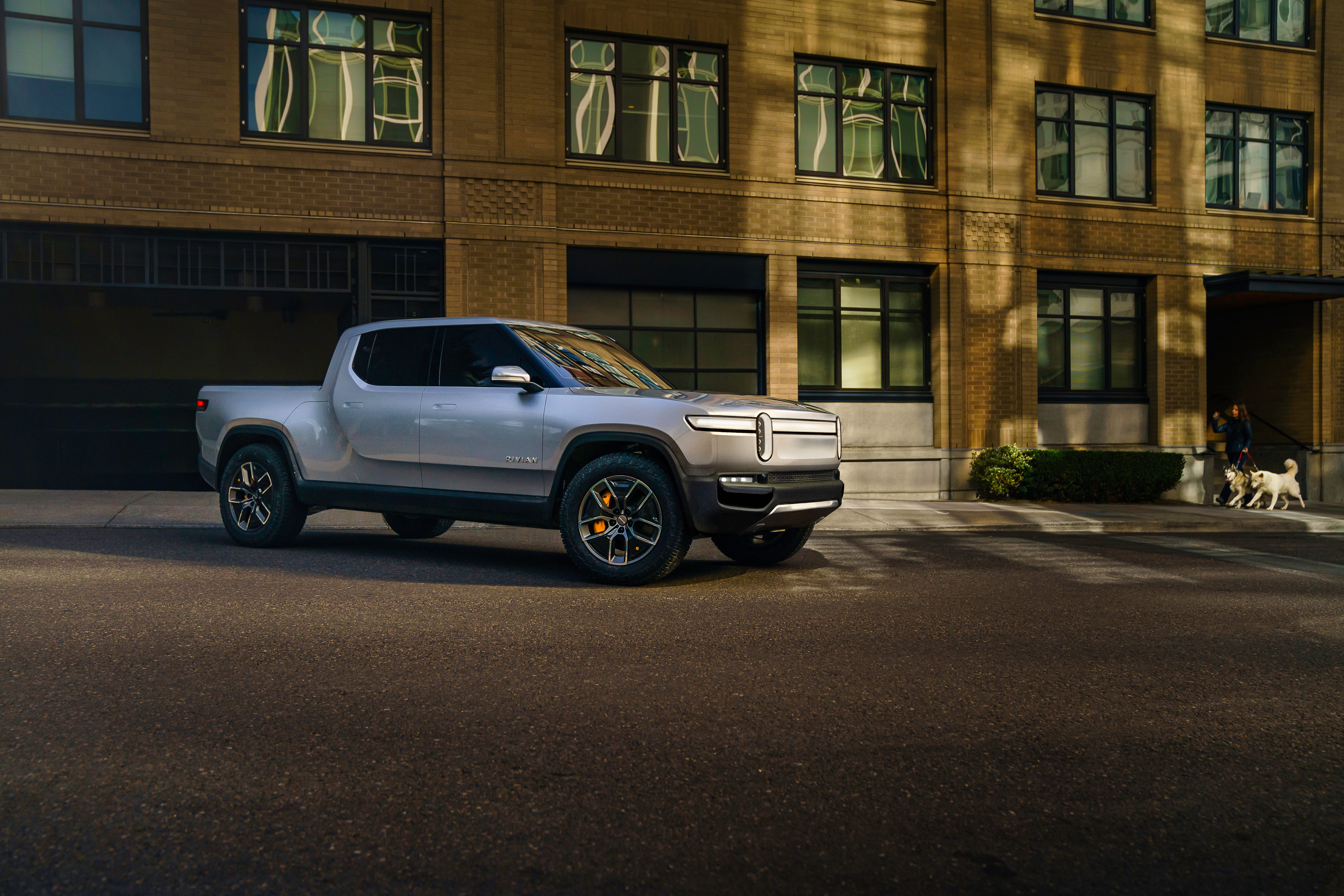
The Rivian R1T, one of the most-discussed coming electric pickups. Photo: Courtesy Rivian.

In an announcement yesterday, BMW said it will introduce an electric vehicle with a solid-state battery by 2030. The same day, Toyota announced that it's creating a new EV called the "bz4x," to be offered for sale the middle of next year, not to mention an electric pickup not long after.

For a year, GM has crowed that it will put 30 EV models on the road by 2025. VW has been just as loud, boasting that it is installing 3,500 EV charging points in the U.S., deploying 30 EV models under its Audi brand alone by 2025, and aiming to cut battery costs by half by the end of the decade. Next year, Ford will start selling an electric F-150 pickup truck, for four decades its best-selling vehicle.

In recent months and years, the world's major automakers, haunted by the prospect of obsolescence at the hands of Tesla, fast-moving Chinese automakers, or perhaps a legacy rival with some moxie, have been moving at an accelerating pace to go electric. Their target is to more or less get there around 2025, thought to be the tipping point when the plunging sticker price of EVs will reach parity with currently cheaper combustion vehicles.

But the hoopla they are making about their plans — while perhaps heartening to Wall Street and shareholders ­ — is also exceptionally risky. Experts say that every time the automakers signal their intentions, they increase the potential of an assault by the "Osborne Effect," a commercially deadly phenomenon that could leave them with billions of dollars in losses.

In an Osborne outbreak, consumers are blasted with the advance announcement of a mind-blowing coming breakthrough in a product, like a popular electronic device. The new version is due in six months, a year, or perhaps a bit longer. The consumer, now aware that what's on the store shelf is going to be outdated, waits to buy the new version. The one on the shelf keeps sitting there, unbought, losing the company a lot of money. In the case of Adam Osborne, a computer pioneer for whom the effect is named, he announced a super-upgrade of his computer in 1983, a year before its actual release. Sales of his current version ceased. Two years later, he was bankrupt.

Reilly Brennan, a Silicon Valley venture capitalist who specializes in mobility, told me that's what threatens the automakers. "Car companies do this insane thing of showing you concept cars six years in advance," Brennan told me. "Dealers have hated concept cars because they want to sell 2021 cars, not 2025."

The Osborne danger is on two levels: An important fraction of the auto-buying public could delay an otherwise planned vehicle purchase for three years, waiting for a hard look at the flood of 2024 or 2025 EV sedans, SUVs and pickup trucks, all priced about the same as their gasoline-run cousins. What happens next will depend on the consumers' mood: They may buy mainly combustion and a trickle of the EVs, as they always have, or they could play out a new iPhone moment — a crazed purchase of EVs. Whichever, there could be a lot of 2022–2024 combustion models left unsold on dealer lots.

The second level of impact could come in the second half of the decade, well after cost parity is reached, when the price of EVs may be even below that of combustion. Most automakers will not have fully made the transition to EVs, and will be to a large degree still reliant on conventional vehicles, which will now be in danger of Osborne obsolescence. "Most people haven't even driven an EV," Brennan said. "The real Osborne Effect will be at total cost parity and the real experience in which a person's peer group owns one and they've been able to drive one. It's a matter of what the industry calls, 'getting butts into seats.'"

Some have cast doubt on the Osborne thesis, contending that the computer company died because of an entirely different blunder. Possibly so, but there is no doubt that once-proud products have been made obsolete by newer models. Think the sleek Nokia 8210, a phone about half the size and weight of a deck of cards, which cost about $400 when it came out in 1999 and made people swoon just like the iPhone did starting in 2007, when Nokia fell off the sales map. Or how about the Kodak Instamatic, the must-have film camera owned probably by every second or third household in the United States through the 1960s, 1970s and much of the 1980s. We all know what happened next.

Obsolescence comes in many forms. There has been a multi-year slowdown in U.S. automobile sales: They have gone from 17.5 million vehicles sold in 2016, to 17 million in 2019, 14.9 million in the Covid-19 year of 2020, and are on track to sell roughly 16.8 million this year. Consumer habits and tastes are in motion. That another mind-shift to EVs could occur — just as has happened on Wall Street and in Silicon Valley — seems indisputable.

Editor at Large, Medium, covering the turbulence all around us, electric vehicles, batteries, social trends. Writing The Mobilist. Ex-Axios, Quartz, WSJ, NYT.


Wednesday, June 23, 2021

ANS -- Robert Reich on the rivalry with China.

this was attached to a Guardian article, but I didn't capture that, I just wanted you to read what Robert Reich said.  What do you think?
--Kim


China's increasingly aggressive geopolitical and economic stance in the world is unleashing a fierce bipartisan backlash in America. That's fine if it leads to more public investment in basic research, education, and infrastructure – as did the Sputnik shock of the late 1950s. But it poses dangers as well.
More than 60 years ago, the sudden and palpable fear that the Soviet Union was lurching ahead of us shook America out of a postwar complacency and caused the nation to do what it should have been doing for many years. Even though we did it under the pretext of national defense – we called it the National Defense Education Act and the National Defense Highway Act and relied on the Defense Advanced Research Projects Administration for basic research leading to semiconductors, satellite technology, and the Internet – the result was to boost US productivity and American wages for a generation.
When the Soviet Union began to implode, America found its next foil in Japan. Japanese-made cars were taking market share away from the Big Three automakers. Meanwhile, Mitsubishi bought a substantial interest in the Rockefeller Center, Sony purchased Columbia Pictures, and Nintendo considered buying the Seattle Mariners. By the late 1980s and start of the 1990s, countless congressional hearings were held on the Japanese "challenge" to American competitiveness and the Japanese "threat" to American jobs.
A tide of books demonized Japan – Pat Choate's Agents of Influence alleged Tokyo's alleged payoffs to influential Americans were designed to achieve "effective political domination over the United States". Clyde Prestowitz's Trading Places argued that because of our failure to respond adequately to the Japanese challenge "the power of the United States and the quality of American life is diminishing rapidly in every respect". William S Dietrich's In the Shadow of the Rising Sun claimed Japan "threatens our way of life and ultimately our freedoms as much as past dangers from Nazi Germany and the Soviet Union".
Robert Zielinski and Nigel Holloway's Unequal Equities argued that Japan rigged its capital markets to undermine American corporations. Daniel Burstein's Yen! Japan's New Financial Empire and Its Threat to America asserted that Japan's growing power put the United States at risk of falling prey to a "hostile Japanese ... world order".
And on it went: The Japanese Power Game,The Coming War with Japan, Zaibatsu America: How Japanese Firms are Colonizing Vital US Industries, The Silent War, Trade Wars.
But there was no vicious plot. We failed to notice that Japan had invested heavily in its own education and infrastructure – which enabled it to make high-quality products that American consumers wanted to buy. We didn't see that our own financial system resembled a casino and demanded immediate profits. We overlooked that our educational system left almost 80% of our young people unable to comprehend a news magazine and many others unprepared for work. And our infrastructure of unsafe bridges and potholed roads were draining our productivity.
In the present case of China, the geopolitical rivalry is palpable. Yet at the same time, American corporations and investors are quietly making bundles by running low-wage factories there and selling technology to their Chinese "partners". And American banks and venture capitalists are busily underwriting deals in China.
I don't mean to downplay the challenge China represents to the United States. But throughout America's postwar history it has been easier to blame others than to blame ourselves.
The greatest danger we face today is not coming from China. It is our drift toward proto-fascism. We must be careful not to demonize China so much that we encourage a new paranoia that further distorts our priorities, encourages nativism and xenophobia, and leads to larger military outlays rather than public investments in education, infrastructure, and basic research on which America's future prosperity and security critically depend.
The central question for America – an ever more diverse America, whose economy and culture are rapidly fusing with the economies and cultures of the rest of the globe – is whether it is possible to rediscover our identity and our mutual responsibility without creating another enemy.
What do you think?