Tuesday, March 02, 2021

ANS -- 'If masks and social distancing don’t work, then what the hell happened to the flu?'

Here's a short article that's a bit less serious, but it does pose a good question.  


--Kim


 Recommend 449
   Tweet
388 Comments 388 New
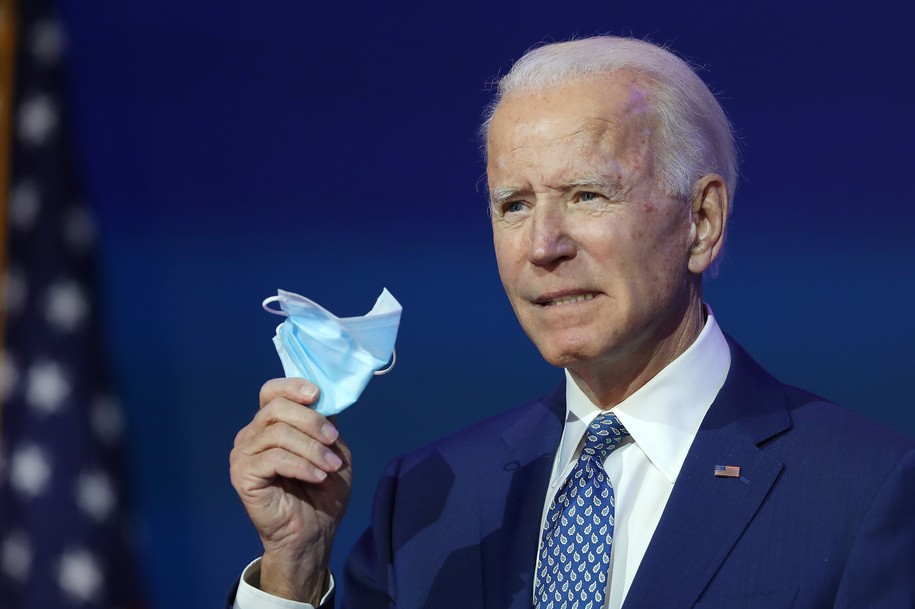
WILMINGTON, DELAWARE - NOVEMBER 09:  U.S. President-elect Joe Biden holds a protective mask as he speaks to the media after receiving a briefing from the transition COVID-19 advisory board on November 09, 2020 at the Queen Theater in Wilmington, Delaware. Mr. Biden spoke about how his administration would respond to the coronavirus pandemic. (Photo by Joe Raedle/Getty Images)

Though my spot on the introversion spectrum lies somewhere between Kleenex box-wearing Howard Hughes and urine-collecting Howard Hughes (and as I continue to age, I'm on a bullet train to raw-fish-eating Gollum), I still usually get sick in the winter at least once.

In the past, while grocery shopping or taking in a matinee movie, I'd occasionally run into someone I know. (If I can avoid early eye contact, I usually conduct a rapid one-man exfil, though I've noticed that smoke grenades are far less welcome in Whole Foods than Fred Meyer for some reason, just in case you're keeping track.)

This year? I haven't had so much as a sniffle, though every throat tickle and minor cough sends a frisson of dread down my spine.

Turns out I'm not alone. This year's flu season—long feared as the second head of a twin-headed monster—has been decidedly more Matt Gaetz brain than Matt Gaetz cranium (i.e., walnut-sized as opposed to college dorm refrigerator-sized).

That's almost certainly because of the coronavirus mitigation efforts that have helped flatten the COVID-19 curve, even as our ex-pr*sident did everything in his power to secure our spot in the record books.

For the nontweeterers: "Serious question: If masks and social distancing don't work, then what the hell happened to the flu?"

Of course, that guy is a medical doctor, so Qonservatives will naturally dismiss his pointed question out of hand and/or counter with something Donald Trump read off the back of a Lucky Charms box, but Dr. Ghali raises a good point. What happened to the annual flu season, which has traditionally been a deadly killer in its own right?

The AP:

Flu has virtually disappeared from the U.S., with reports coming in at far lower levels than anything seen in decades.

Experts say that measures put in place to fend off the coronavirus — mask wearing, social distancing and virtual schooling — were a big factor in preventing a "twindemic" of flu and COVID-19. A push to get more people vaccinated against flu probably helped, too, as did fewer people traveling, they say.

…

Nationally, "this is the lowest flu season we've had on record," according to a surveillance system that is about 25 years old, said Lynnette Brammer of the U.S. Centers for Disease Control and Prevention.

In the midst of a brutal pandemic, we'll take these small victories. Though when you consider that flu typically kills tens of thousands of Americans each year, "small" probably isn't the right way to describe this.

One possible partial explanation for these lower numbers, according to the AP, is that COVID-19 has "essentially muscled aside flu and other bugs" that tend to emerge in the winter. Scientists don't fully understand this phenomenon, but it has been observed in the past with competing flu strains.

That said, the drop in flu cases has been remarkable. And it's occurred across the country. Dr. Nate Mick, head of the emergency department at Maine Medical Center in Portland, told the AP: "I have seen zero documented flu cases this winter." Meanwhile, in Oregon, Salem Hospital's affiliated respiratory clinics have also been flu-free.

In addition, according to the Centers for Disease Control and Prevention, only one pediatric flu death has been reported in the U.S. as opposed to 92 at this same point last year.

That's a nice, comforting ray of sunshine in the midst of a dark, depressing winter.

Personally, I hate getting sick. I may wear a mask in stores and movie theaters for the rest of my life. And not just because I don't want to be recognized. But, you know, that would be a perk.

Social distancing? Erm, well, I've pretty much always done that.

What about you? Are you going to keep masking after this is all over? Let me know in the accompanying poll.

"This guy is a natural. Sometimes I laugh so hard I cry." — Bette Midler on author Aldous J. Pennyfarthing via Twitter. Need a thorough Trump cleanse? Thanks to Goodbye, Asshat: 101 Farewell Letters to Donald Trump, Dear F*cking Lunatic, Dear Pr*sident A**clown and Dear F*cking Moron, you can purge the Trump years from your soul sans the existential dread. Only laughs from here on out. Click those links, yo!


ANS -- HCR - March 1, 2021

Here's another summary by Heather Cox Richardson.  Part of it is about the danger our democracy is in.  
--Kim


March 1, 2021 (Monday)
This morning, conservative pundit William Kristol wrote in The Bulwark what a number of us have been saying for a while now, and it dovetails cleanly with the current Republican attempt to suppress voting.
Kristol warns that our democracy is in crisis. For the first time in our history, we have failed to have a peaceful transfer of power. The Republican Party launched a coup—which fortunately failed—and "now claims that the current administration is illegitimately elected, the result of massive, coordinated fraud. The logical extension of this position would seem to be that the American constitutional order deserving of our allegiance no longer exists."
"So," he notes, "we are at the edge of crisis, having repulsed one attempted authoritarian power grab and bracing for another."
Claims that American democracy is on the ropes in the face of an authoritarian power grab raise accusations of partisanship… but in this case, the person making the claim is a conservative, who goes on to urge conservatives to join behind President Joe Biden to try to save democracy. Kristol warns that "a dangerous, anti-democratic faction" of the Republican Party "is not committed in any serious way to the truth, the rule of law, or the basic foundations of our liberal democracy."
Kristol's call is notable both because of his position on the right and because he warns that we are absolutely not in a moment of business-as-usual. Perhaps because it is impossible to imagine, we seem largely to have normalized that the former president of the United States refused to accept his loss in the 2020 election and enlisted a mob to try to overturn the results. Along with his supporters, he continues to insist that he won that election and that President Joe Biden is an illegitimate usurper.
This big lie threatens the survival of our democracy.
At the Conservative Political Action Committee (CPAC) conference this weekend in Orlando, Florida, Trump supporters doubled down on the lie that Biden stole the 2020 election. From a stage shaped like a piece of Nazi insignia, speakers raged that they were victims of "cancel culture" on the part of Big Tech and the left, which are allegedly trying to silence them. To restore fairness, they want to stop "voter fraud" and restore "election integrity," and they want to force social media giants to let them say whatever they want on social media.
In the Washington Post, commentator Jennifer Rubin said the modern conservatives at CPAC had no policy but revenge, "resentment, cult worship and racism," and no political goal but voter suppression. It is "the only means by which they seek to capture power in an increasingly diverse America," she notes. A poll showed that "election integrity" was the issue most important to CPAC attendees, with 62% of them choosing it over "constitutional rights" (which got only 48%).
Trump himself packaged this lie in words that sounded much like the things he said before the January 6 insurrection. He claimed that he had won the election, that the election was "rigged," and that it was "undeniable" that the rules of the election were "illegally changed"—although none of his many court challenges stuck. He attacked the Supreme Court in language that echoed the attacks on his vice president, Mike Pence, that had rioters searching him out to kill him. "They didn't have the guts or the courage to make the right decision," Trump said of the justices.
The purpose of this big lie is not only to reinforce Trump's hold on the Republican Party, but also to delegitimize the Democratic victory. If Democrats cheat, it makes sense to prevent "voter fraud" by making it harder to vote. "We must pass comprehensive election reforms, and we must do it now," Trump said.
Republican reforms, though, mean voter suppression. Currently, Republican legislators in 43 states have introduced more than 250 bills to restrict voting. They want to cut back early voting and restrict mail-in voting, limit citizen-led ballot initiatives, and continue to gerrymander congressional districts. Arizona is trying to make it possible for state legislatures, rather than voters, to choose the state's presidential electors. Rather than try to draw voters to their party's candidates by moderating their stances, they are trying to win power by keeping people from voting.
I cannot emphasize enough how dangerous this is. We have gone down this road before in America, in the South after 1876. The outcome was the end of democracy in the region and the establishment of a single, dominant party for generations. In those decades, a small body of men ruled their region without oversight and openly mocked the idea of justice before the law. A member of the jury that took only 67 minutes to acquit Roy Bryant and J.W. Milam for murdering 14-year-old Emmett Till in 1955 famously said, "We wouldn't have taken so long if we hadn't stopped to drink pop." White men dominated women and their Black and Brown neighbors, but their gains were largely psychological, as the one-party system created instability that slowed down economic investment, while leaders ignored education and infrastructure.
Tomorrow, the Supreme Court will hear arguments in a lawsuit concerning Arizona election laws. The case is from 2016, when Democrats argued that two Arizona voting laws discriminated against Hispanic, Black, and Indigenous voters in violation of the 1965 Voting Rights Act, which prohibits laws that hamper voting on the basis of race. The laws called for ballots cast in the wrong precinct to be thrown away and allowed only election officials, letter carriers, household family members, or caregivers to return someone else's mail-in ballot. A violation could bring a $150,000 fine. The court's decision in this case will have big implications for the legitimacy of the restrictions Republican legislatures are trying to enact now.
Meanwhile, Democrats are trying to shore up voting rights with H.R. 1, the For the People Act of 2021. This sweeping measure would make it easier to vote, curtail gerrymandering, make elections more secure, and reform the campaign finance system.
They are also proposing the John R. Lewis Voting Rights Act, H.R. 4, which would restore the parts of the Voting Rights Act the Supreme Court gutted in 2013 in the Shelby v. Holder decision, limiting changes to election laws that disproportionately affect people of color. After Shelby v. Holder, a number of states immediately enacted sweeping voter suppression laws that disproportionately hit minorities, the elderly, and the young, all populations perceived to vote Democratic.
Neither of these bills will pass the Senate unless the Democrats modify the filibuster rule, which permits Republicans to stop legislation unless it can muster not just a majority, but a supermajority of 60 votes.
Today the Senate Judiciary Committee voted in favor of Judge Merrick Garland for Attorney General. Garland is noted for supervising the prosecution of the men who bombed the Alfred P. Murrah federal building in Oklahoma City, Oklahoma, in 1995, hoping to topple the federal government. In his opening remarks to the Senate Judiciary committee last week, Garland vowed that, if confirmed, he "will supervise the prosecution of white supremacists and others who stormed the Capitol on January 6—a heinous attack that sought to disrupt a cornerstone of our democracy: the peaceful transfer of power to a newly elected government." He promised that he would follow where the investigation led, even if it went "upstream" to those who might not have been in the Capitol, but who nevertheless were participants in the insurrection.
The vote to move Garland's nomination to the full Senate was 15 to 7, with Ben Sasse (R-NE), Mike Lee (R-UT), Josh Hawley (R-MO), Tom Cotton (R-AR), John Kennedy (R-LA), Ted Cruz (R-TX), and Marsha Blackburn (R-TN) all voting no.
With the exception of Sasse, all those voting no have signed on to the big lie.

Monday, March 01, 2021

ANS -- The Republican Party Is Now in Its End Stages

Here is a fairly short article about the last throes of the Republican Party -- still dangerous, but not effective or democratic.  Good article.


--Kim


The Republican Party Is Now in Its End Stages

The GOP has become, in form if not in content, the Communist Party of the Soviet Union of the late 1970s.

FEBRUARY 25, 2021
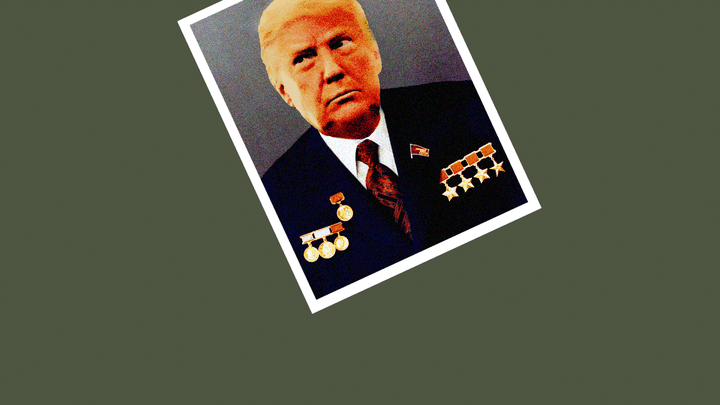
An illustration of Donald Trump in a Soviet uniform.
GETTY / THE ATLANTIC

We are living in a time of bad metaphors. Everything is fascism, or socialism; Hitler's Germany, or Stalin's Soviet Union. Republicans, especially, want their followers to believe that America is on the verge of a dramatic time, a moment of great conflict such as 1968—or perhaps, even worse, 1860. (The drama is the point, of course. No one ever says, "We're living through 1955.")

Ironically, the GOP is indeed replicating another political party in another time, but not as the heroes they imagine themselves to be. The Republican Party has become, in form if not in content, the Communist Party of the Soviet Union of the late 1970s.

I can already hear the howls about invidious comparisons. I do not mean that modern American Republicans are communists. Rather, I mean that the Republicans have entered their own kind of end-stage Bolshevism, as members of a party that is now exhausted by its failures, cynical about its own ideology, authoritarian by reflex, controlled as a personality cult by a failing old man, and looking for new adventures to rejuvenate its fortunes.

No one thinks much about the Soviet Union in the late 1970s, and no one really should. This was a time referred to by the last Soviet leader, Mikhail Gorbachev, as the vremia zastoia—"the era of stagnation." By that point, the Soviet Communist Party was a spent force, and ideological conviction was mostly for chumps and fanatics. A handful of party ideologues and the senior officers of the Soviet military might still have believed in "Marxism-Leninism"—the melding of aspirational communism to one-party dictatorship—but by and large, Soviet citizens knew that the party's formulations about the rights of all people were just window dressing for rule by a small circle of old men in the Kremlin.


"The party" itself was not a party in any Western sense, but a vehicle for a cabal of elites, with a cult of personality at its center. The Soviet leader Leonid Brezhnev was an utterly mediocre man, but by the late 1970s he had cemented his grip on the Communist Party by elevating opportunists and cronies around him who insisted, publicly and privately, that Brezhnev was a heroic genius. Factories and streets and even a city were named for him, and he promoted himself to the top military rank of "Marshal of the Soviet Union." He awarded himself so many honors and medals that, in a common Soviet joke of the time, a small earthquake in Moscow was said to have been caused by Brezhnev's medal-festooned military overcoat falling off its hanger.

The elite leaders of this supposedly classless society were corrupt plutocrats, a mafia dressed in Marxism. The party was infested by careerists, and its grip on power was defended by propagandists who used rote phrases such as "real socialism" and "Western imperialism" so often that almost anyone could write an editorial in Pravda or Red Star merely by playing a kind of Soviet version of Mad Libs. News was tightly controlled. Soviet radio, television, and newspaper figures plowed on through stories that were utterly detached from reality, regularly extolling the successes of Soviet agriculture even as the country was forced to buy food from the capitalists (including the hated Americans).

Members of the Communist Party who questioned anything, or expressed any sign of unorthodoxy, could be denounced by name, or more likely, simply fired. They would not be executed—this was not Stalinism, after all—but some were left to rot in obscurity in some make-work exile job, eventually retiring as a forgotten "Comrade Pensioner." The deal was clear: Pump the party's nonsense and enjoy the good life, or squawk and be sent to manage a library in Kazakhstan.

This should all sound familiar.

The Republican Party has, for years, ignored the ideas and principles it once espoused, to the point where the 2020 GOP convention simply dispensed with the fiction of a platform and instead declared the party to be whatever Comrade—excuse me, President—Donald Trump said it was.

Like Brezhnev, Trump has grown in status to become a heroic figure among his supporters. If the Republicans could create the rank of "Marshal of the American Republic" and strike a medal for a "Hero of American Culture," Trump would have them both by now.

A GOP that once prided itself on its intellectual debates is now ruled by the turgid formulations of what the Soviets would have called their "leading cadres," including ideological watchdogs such as Tucker Carlson and Mark Levin. Like their Soviet predecessors, a host of dull and dogmatic cable outlets, screechy radio talkers, and poorly written magazines crank out the same kind of fill-in-the-blanks screeds full of delusional accusations, replacing "NATO" and "revanchism" with "antifa" and "radicalism."

Falling in line, just as in the old Communist Party, is rewarded, and independence is punished. The anger directed at Liz Cheney and Adam Kinzinger makes the stilted ideological criticisms of last century's Soviet propagandists seem almost genteel by comparison. (At least Soviet families under Brezhnev didn't add three-page handwritten denouncements to official party reprimands.)

This comparison is more than a metaphor; it is a warning. A dying party can still be a dangerous party. The Communist leaders in those last years of political sclerosis arrayed a new generation of nuclear missiles against NATO, invaded Afghanistan, tightened the screws on Jews and other dissidents, lied about why they shot down a civilian 747 airliner, and, near the end, came close to starting World War III out of sheer paranoia.

The Republican Party is, for now, more of a danger to the United States than to the world. But like the last Soviet-era holdouts in the Kremlin, its cadres are growing more aggressive and paranoid. They blame spies and provocateurs for the Capitol riot, and they are obsessed with last summer's protests (indeed, they are fixated on all criminals and rioters other than their own) to a point that now echoes the old Soviet lingo about "antisocial elements" and "hooligans." They blame their failures at the ballot box not on their own shortcomings, but on fraud and sabotage as the justification for a redoubled crackdown on democracy.

Another lesson from all this history is that the Republicans have no path to reform. Like their Soviet counterparts, their party is too far gone. Gorbachev tried to reform the Soviet Communist Party, and he remains reviled among the Soviet faithful to this day. Similar efforts by the remaining handful of reasonable Republicans are unlikely to fare any better. The Republican Party, to take a phrase from the early Soviet leader Leon Trotsky, should now be deposited where it belongs: in the "dustbin of history."

TOM NICHOLS is a contributing writer at The Atlantic and the author of the forthcoming book Our Own Worst Enemy: The Assault From Within on Modern Democracy.