Tuesday, April 20, 2021

ANS -- HCR April 19, 2021

Here's another from Heather Cox Richardson.  This one is about the history of gun issues in the US.
--Kim


April 19, 2021 (Monday)
America today is caught in a plague of gun violence.
It wasn't always this way. Americans used to own guns without engaging in daily massacres. Indeed, it always jumps out at me that the infamous St. Valentine's Day Massacre of 1929, when members of one Chicago gang set up and killed seven members of a rival gang, was so shocking it led to legislation that prohibits automatic weapons in the U.S.
Eighty-nine years later, though, in 2018, another Valentine's Day shooting at Marjory Stoneman Douglas High School in Parkland, Florida, killed 17 children and wounded 17 others. In response, then-President Donald Trump called for arming teachers, and the Republican-dominated Florida legislature rejected a bill that would have limited some high-capacity guns.
Our acceptance of violence today stands in striking contrast to Americans' horror at the 1929 Valentine's Day Massacre.
Today's promotion of a certain kind of gun ownership has roots in the politics of the country since the Supreme Court handed down the 1954 Brown v. Board of Education of Topeka, Kansas, decision, which declared racial segregation in public schools unconstitutional. Since Democratic President Franklin Delano Roosevelt instituted a government that actively shaped the economy, businessmen who hated government regulation tried to rally opposition to get rid of that government. But Americans of the post-World War II years actually liked regulation of the runaway capitalism they blamed for the Great Depression.
The Brown v. Board decision changed the equation. It enabled those who opposed business regulation to reach back to a racist trope from the nation's Reconstruction years after the Civil War. They argued that the active government after World War II was not simply regulating business. More important, they said, it was using tax dollars levied on hardworking white men to promote civil rights for undeserving Black people. The troops President Dwight Eisenhower sent to Little Rock Central High School in 1957, for example, didn't come cheap. Civil Rights, then, promoted by the newly active federal government, were virtually socialism.
This argument had sharp teeth in the 1950s, as Americans recoiled from the growing influence of the U.S.S.R., but it came originally from the Reconstruction era. Then, white supremacist southerners who were determined to stop the federal government from enforcing Black rights argued that they were upset about Black participation in society not because of race—although of course they were—but rather because poor Black voters were electing lawmakers who were using white people's tax dollars to lay roads, for example, or build schools.
In contrast to this apparent socialism, southern Democrats after the Civil War lionized the American cowboy, whom they mythologized as a white man (in fact, a third of the cowboys were men of color) who wanted nothing of the government but to be left alone (in reality, the cattle industry depended on the government). Out there on the western plains, the mythological cowboy worked hard for a day's pay for moving cattle to a railhead, all the while fighting off Indigenous Americans, Mexicans, and rustlers who were trying to stop him.
That same mythological cowboy appeared in the 1950s to stand against what those opposed to business regulation and civil rights saw as the creeping socialism of their era. By 1959, there were 26 Westerns on TV, and in March 1959, eight of one week's top shows were Westerns. They showed hardworking cowboys protecting their land from evildoers. The cowboys didn't need help from their government; they made their own law with a gun.
In 1958, Republican Senator Barry Goldwater of Arizona rocketed to prominence after he accused the president from his own party, Dwight Eisenhower, of embracing "the siren song of socialism." Goldwater had come from a wealthy background after his family cashed in on the boom of federal money flowing to Arizona dam construction, but he presented himself to the media as a cowboy, telling stories of how his family had come to Arizona when "[t]here was no federal welfare system, no federally mandated employment insurance, no federal agency to monitor the purity of the air, the food we ate, or the water we drank," and that "[e]verything that was done, we did it ourselves." Goldwater opposed the Brown v. Board decision and Eisenhower's decision to use troops to desegregate Little Rock Central High School.
Increasingly, those determined to destroy the postwar government emphasized the hardworking individual under siege by a large, grasping government that redistributed wealth to the undeserving, usually people of color. A big fan of Goldwater, Ronald Reagan famously developed a cowboy image even as he repeatedly warned of the "welfare queen" who lived large on government benefits she stole.
As late as 1968, the National Rifle Association supported some forms of gun control, but that changed in the 1980s as the organization affiliated itself with Reagan's Republican Party. In 1981, an assassin attempted to kill the president and succeeded in badly wounding him, as well as injuring the president's press secretary, James Brady, and two others. Despite pressure to limit gun ownership, in 1986, under pressure from the NRA, the Republican Congress did the opposite: it passed the Firearms Owners' Protection Act, which erased many of the earlier controls on gun ownership, making it easier to buy, sell, and transport guns across state lines.
In 1987, Congress began to consider the Brady Handgun Violence Prevention Act, otherwise known as the Brady Bill, to require background checks before gun purchases and to prevent certain transfer of guns across state lines. As soon as the measure was proposed, the NRA shifted into high gear to prevent its passage. The bill did not pass until 1993, under President Bill Clinton's administration. The NRA set out to challenge the law in the courts.
While the challenges wound their way upward, the idea of individuals standing against a dangerous government became central to the Republican Party. By the 1990s, men increasingly vowed to take up arms against the government that talk radio hosts told them was bringing socialism to America. After April 19, 1993, when federal officers stormed the compound of a religious cult whose former members reported that their leader, David Koresh, was stockpiling weapons, talk radio hosts like Rush Limbaugh and Alex Jones warned that the government was about to impose martial law. Angry opponents of the government began to organize as well-armed "militias."
In 1997, the NRA's challenges to the Brady Bill had made their way to the United States Supreme Court. Printz v. United States brought together the idea of unfettered gun ownership and Republican government. The court held that it was unconstitutional for the federal government to require states to perform background checks. This both freed up gun purchases and endorsed states' rights, the principle at the heart of the Republican policy of dismantling the active government that regulates business and protects civil rights.
We are in a bizarre moment, as Republican lawmakers defend largely unlimited gun ownership even as recent polls show that 84% of voters, including 77% of Republicans, support background checks. The link between guns, cowboys, race, and government in America during Reconstruction, and again after the Brown v. Board decision, helps to explain why.

ANS -- How This Tiny EV Is Outselling Tesla

Here is an article about why a cheap, tiny, slow EV is better for the world.  
--Kim


How This Tiny EV Is Outselling Tesla

Everything that sucks about this car also makes it great

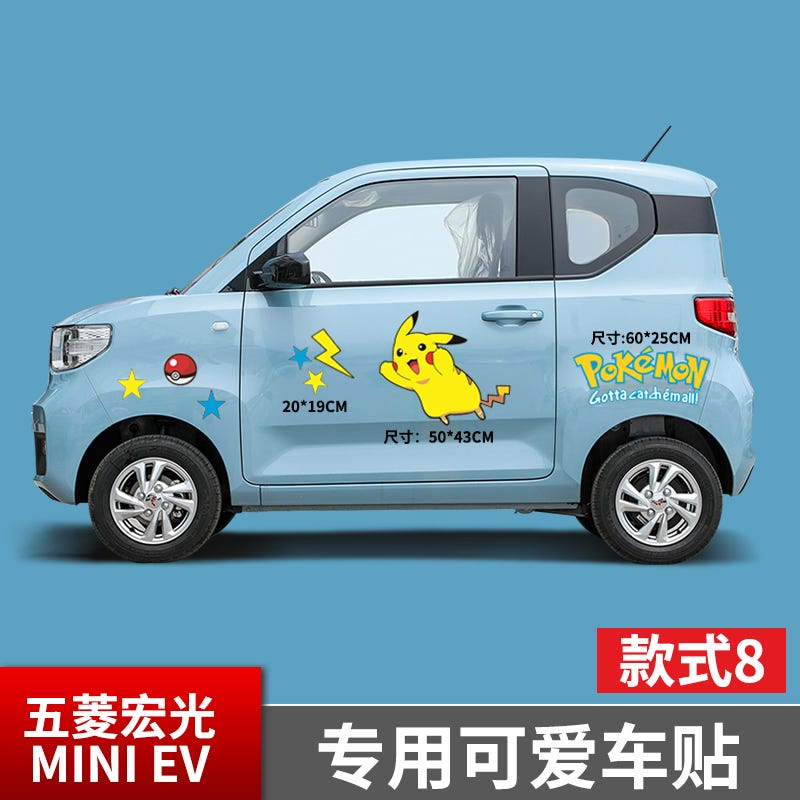
Americans are so used to cruising around in giant fuck-you palaces that a sane car looks insane. The Hong Guang Mini EV is a sane car. It's tiny, costs less than $5,000, and is slow as shit. In short, by all the standards Americans use to judge a personal vehicle, it sucks. That's what makes it great for society.

Small Is Good (For Everyone)

Americans are used to thinking small cars are lame and dangerous, and they are, within the Mad Max landscape they call a society. Americans actually do not understand how far their vehicles have bifurcated from human reality.

This is not normal. Other societies do not have death machines like this. Angie Schmitt via Bloomberg

What Americans call 'good' in a car is actually dumping huge negatives onto everyone else. A 'good' car requires huge public roads, parking, and death to the public should they get in your way. Not to mention the pollution and climate change. The answer to this problem has been making them electric, but you still have the underlying selfishness of driving two tons of death metal around. Tesla's new Cybertruck looks even more dangerous than other trucks, and your organs are not protected by its electricity.

The simple fact is that your cars don't need to be so fucking big and if you really need such a thing on a farm, you shouldn't be able to drive it into a city. It's also a fact that your need to full recline and store your supersized soda doesn't trump other people's right to have a livable city and vital organs. America's transport dystopia is one big tragedy of the commons, where the needs of private vehicle owners have literally overridden all public decency and common sense. The idea that simply electrifying this shitshow will solve all these problems is just false. The problem isn't the engines. It's the cars.

For an example of sanity you can look almost anywhere else. No one else drives these sociopath cars. Here I'll talk about the Hong Guang, in China.

From a review of the Hong Guang

This car is tiny. To move 60kg of human it only uses 665kg of machine (1 to 10). Compare this to an F-150 which weights easily 2,000 kg (1 to 33). The Hong Guang also seems basic and uncomfortable AF inside. It has barely any safety features and is basically terrible for the car owner. But you have to understand, life on the road is a zero-sum game. Everything that's bad about being inside this car is great for everyone outside.

Getting hit by 665kg in the legs is very different from getting hit by two tons in the chest. The road and parking space required for something 3m long is very different from something 6m long and 3.5m wide. A car like the Hong Guang means livable streets for everyone, at the cost of minor inconvenience to the driver. Which is how it should be.

Small is also good for most owners. You pay less, whatever your energy source is, and you're not paying to move a literal shit-ton of metal. You're not struggling to find parking spaces to fit your massive ego into. More to the point, you're not paying to be a noxious asshole. The Hong Guang costs $4,500, and is worth much more, for reasons I'll get into.

Cheap Is Good (For Everyone)

This car is literally cheap. The foam seats, the plastic, everything is cheap. But you really have to reorient your thinking. This category of vehicle is actually great… for a scooter.

In China, India, and South Asia at large there is an entire category of vehicles between motorbikes and cars. Three-wheelers, scooters, these lightly armored vehicles are basically motorbike engines with some scaffolding. They're not very fast or fancy, but they're great for zipping human beings around the city and are incredibly hardy even in rural areas. Americans are unfamiliar with this entire category of transportation, but if you understand it then something like the Hong Guang makes sense. I personally spend nearly as much time in a three-wheeler as a car:

In this context, the Hong Guang is not a terribly shit car. It's a good three-wheeler. A vehicle like this is really for someone who wants to move their family or business vehicle up from a scooter, but who can't afford a car. This thing is obviously more shit than a 1.5 ton sedan, but it's much better than a motorbike. That's the niche that a vehicle like this fills, and a big reason it sells so well.

In India companies like Tata have tried this with the Nano and Bajaj with the Qute (and largely failed) but the Hong Guang seems to have succeeded, in large part because it's electric, and because of how that fits into their sane regulations. Hong Guuang sold 20,000 units last month (February, 2021), much more than the 13,700 Model 3's sold by Tesla. Yes, it costs 8X less, but as mentioned that's a good thing. It's cheap and heaps positive benefits on other people. This thing is both accessible and not a huge tax on society.

Speaking of taxes…

Taxes and cities

A big reason that the Hong Guang is successful is because it's actually worth in $15,000. In urban China you may have to pay $10,000 for a license, plate, and you'd have to wait. The Chinese government offers free (and guaranteed) plates for EVs. Hence the value of the thing is actually nearly $15,000, and you only pay one-third of that.

This is actually a rational allocation of value. For an America car you'll spend $75,000 making it a deluxe murder palace, but none of that money goes towards society. It's just more indulgence for already indulged people. With the Hong Guang the tax structure leads to sane vehicle use within their cities.

This is important to understand. Simply electrifying a bad transport system just gives you a bad system, electrified. Electric cars are not some messianic invention that's going to save transport. They're just part of the puzzle, and a relatively small one. Cars should never be the center of a transport system, you should always be focused on moving people. Something like the Hong Guang looks crazy if you think of it how Americans use transport, but that's not how Chinese people use transport.

You'd never take this on a road trip from Beijing to Shanghai, you'd take high-speed rail. You might not even take it to town that often, maybe you'd just ride to the metro station, or when you needed to carry a lot of groceries. None of this makes sense to Americans — who don't have high speed rail or good public transport — but it makes sense. Americans buy cars which have to work for every possible use case, because their public services are so useless. Other people don't live like this. And no one should.

Slow Is Good (For Everyone)

Finally this machine is slow as shit. It's maximum speed is 100 KPH (about 60 MPH). You can't really take this thing on the highway. It has a one speed transmission and would not sound good. That's fine because this is one part of a transport system. Maybe you just shouldn't use a car for that purpose.

Most of the time your car is going less than 50 KPH, or less. Acceleration is just showing off. It imposes danger on everyone else, for the enjoyment of one person in the car. Yes, you could use it for highway driving, but why have you built your cities around highways? Instead of adding lane after lane of dead asphalt that just creates more traffic, why don't you have trains and metros like civilized places?

The fact is that slower cars serve the basic need of the person inside to get around, without imposing death and mayhem on everyone else. And where these cars become impossible (like highways), the answer is to get out of the car. This is the sign of a mature transport system. Everything isn't built around the car. The system is optimized for human beings.

The Parity Of The Commons

As you may have noticed, I haven't talked about the electrification part much. It's important, but not nearly as important as the big transport picture, which is much more than one car. A healthy transport system actually has basic cars and cities that are palaces for the people. A country with palatial cars and unwalkable roads is a civilization that's completely broken down.

Everything that makes a car like this shitty and unappealing, is what makes a society good. Small cars are a minor inconvenience for the driver, but a great relief to pedestrians. Cheap cars are a bit unsexy for the driver, but great for people who've already had sex and need a bit more protection for their babies. Slow cars are not as fun, but they are functional, and enable you to get stuff done without hot-dogging everybody else.

Is it good that this car is electric? Yeah, it's great. But it's even better that this car is shit. It makes for a less tragic commons for everyone else. Tesla is simply not going to save the world. Tesla is just electrified selfishness. Little EVs like this Hong Guang are already outselling Tesla, and they're much better for the world.

I publish these articles early on Patreon, do a weekly round-up, and write exclusive shit that's too personal for here.


Monday, April 19, 2021

ANS -- HCR April 18, 2021

Here's another from Heather Cox Richardson.  She writes about The Big Lie.
--Kim


April 18, 2021 (Sunday)
According to CNN, Representative Marjorie Taylor Greene (R-GA) has scrapped the idea of the "America First Caucus" after considerable pushback, now claiming that she had not approved the platform released on Friday and announced by her own spokesperson.
I have been thinking a lot about Republican lawmakers like Greene lately, and about the Republican Party these days. As I sort through it all, I find myself absolutely gobsmacked that today's party is shaping itself around the Big Lie that Democrat Joe Biden did not win the 2020 election. This is a lie. There is no doubt that this is a lie. Trump or his surrogates filed and lost at least 63 lawsuits over the 2020 election, most of which were dropped for lack of evidence.
When voting company Dominion sued Sidney Powell, one of those arguing Trump won the election, for defamation, her lawyers argued that "No reasonable person would conclude that the statements were truly statements of fact."
And yet, despite the fact that Biden beat Trump by more than 7 million votes and by 306 to 232 electoral votes, Trump insisted, and continues to insist, that he really won the election.
In part, this appears to have been a fund-raising ploy. Thanks to a terrific story by Shane Goldmacher in the New York Times, we now know that the Trump campaign boosted revenues by tricking donors into making recurring donations before the election, replenishing its badly depleted funds. When unsuspecting donors found out and complained, the Trump campaign and the Republican National Committee ended up having to make more than 530,000 refunds worth $64.3 million. That money came in after the election, as Trump promised to fight the election results because, he said, he had been cheated.
"In effect," Goldmacher writes, "the money that Mr. Trump eventually had to refund amounted to an interest-free loan from unwitting supporters at the most important juncture of the 2020 race." To keep the money to cover the refunds coming in, the former president had to maintain that the election had been stolen.
But, as the January 6 insurrection proved, that stance was much more than a grift. Trump and his spokespeople urged supporters to come to Washington, D.C., and somehow pressure Vice President Mike Pence to count the certified ballots not for Biden, as they were prepared, but for Trump. Pence had no authority to do such a thing, and he told Trump so, in writing, prompting Trump to tell his supporters that Pence had let them down. So they took matters into their own hands.
When the Capitol was finally cleared and Congress got back to counting the certified ballots, 8 senators and 139 representatives voted to challenge at least one of the state ballots, turning what is normally a formality into the suggestion that there was something wrong with Biden's election. At the time, pundits suggested that they did not dare to fall afoul of Trump's voters, who were the only solid Republican voters, and whom many of the Republicans hoped to be able to count on in their own next elections.
And yet, they have not repudiated that stance. One hundred and forty-seven of our lawmakers—people sitting currently in Congress, listening to reports from the intelligence committee, shaping our foreign policy—have signed onto the lie that the 2020 election was tainted.
Their support for Trump's outlandish lie had enabled it to metastasize. Now Republican legislators in 47 states have proposed 361 voter restriction bills with the argument that they need to address concerns about voter fraud. That is, without evidence, they have convinced their voters that the 2020 election was stolen, and now they are attempting to change laws to address that conviction. Not coincidentally, the new laws are expected to strengthen Republican power: had it been in place in 2020, for example, the new law Georgia passed would have enabled Republicans to hand the election in that state to Trump.
But the more they harden Trump's base by pretending that the former president won the 2020 election, the harder it is for them to move away from Trump. In Republican primaries in Republican states, candidates are vying to get Trump's endorsement.
It is a vicious downward spiral, based on a lie. As Utah Senator Mitt Romney, who was the Republican candidate for president in 2012, said after the insurrection, "The best way we could show respect for the voters who are upset is by telling them the truth." And yet, Republican lawmakers continue to feed the narrative that Trump won in 2020.
Last month, six in ten Republicans in a Reuters/Ipsos poll said they believed the election was stolen. Where do Republican lawmakers think this is going to end?