From:
Date: Wed, Aug 28, 2019 at 1:26 PM
Subject: Good material
To: Kim Cooper <kimc0240@gmail.com>
Independent media Service Affiliate of the Access Institute of Research Media Project
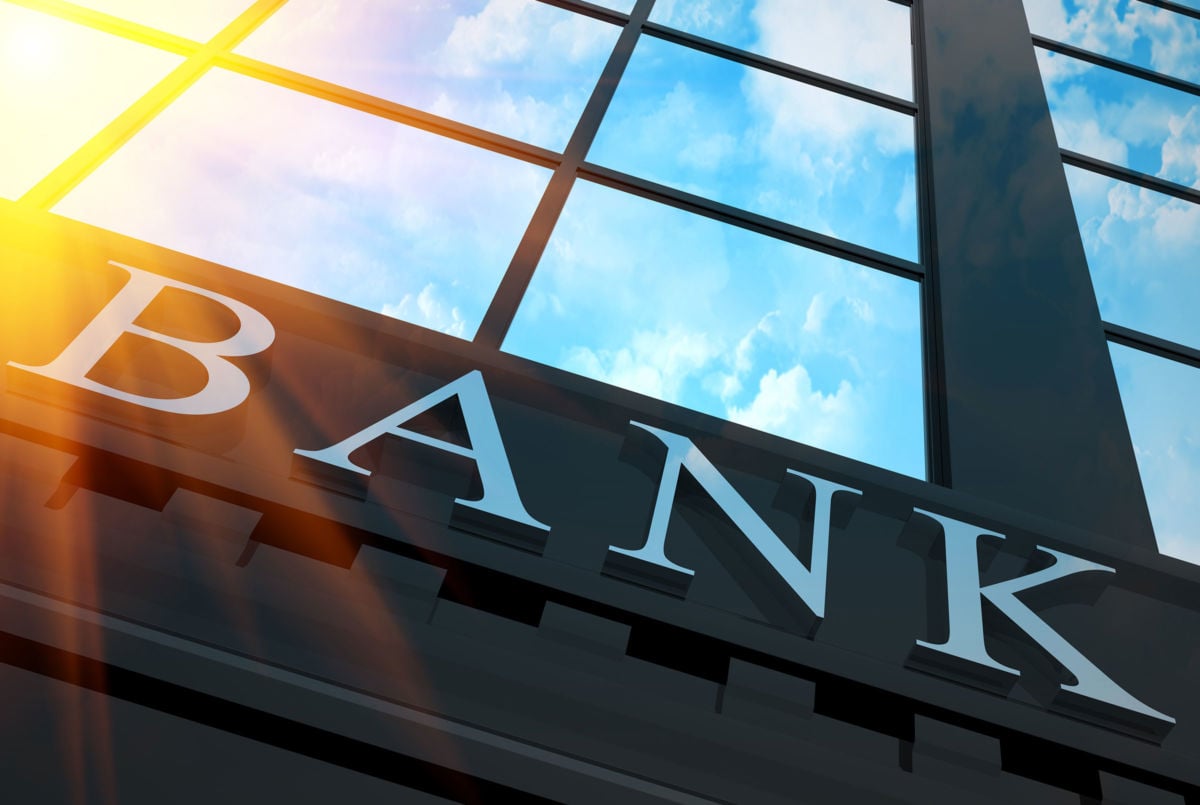
Public banking will bring democracy and accountability to the world of finance.VERTIGO3D / E+ / GETTY IMAGESA specter is haunting Wall Street: the public banking movement, which vows to replace private banks' influence in public affairs.
This movement is gaining traction in states and cities across the U.S. as motions to advance public banking are emerging in legislative halls from California to New York. In response to this momentum, hope is growing that the first U.S. public bank in 100 years will form in the foreseeable future. As this movement gains momentum, sparking a chain reaction, a mass switch to public banks could shift untold billions from the coffers of Wall Street into Main Streets everywhere, ushering in a new economic order of democratized finance.
Now is the time for the public banking movement to counter the false narratives of the opposition and illuminate what the public banking ideal would look like in practice.
As patience for the "too-big-to-fail" banks wanes, cities and states are finally realizing they are better off doing for themselves what Wall Street perniciously insisted we've needed it for: providing necessary banking services to the public. Wall Street has done this with one hand while recklessly gambling, investing in environmentally destructive projects, cheating and looting with the other. Wall Street has made us forget that we have no obligation to put up with exploitation and abuse.
But that's changing. Its extractive tentacles, which have been interwoven into public finance, have been an inconvenient fact of our existence. But now, Wall Street itself is contending with an inconvenient fact: Activists are newly mobilized in the fight to sweep away private bankers' grip from the economy and usher in public sector replacements. Our hope is that it will become common perception that the creation and dissemination of money is — like the operation of courts or fire departments — much better left to democratically accountable and transparent institutions than to profiteers.
Of course, simply being "public" does not make a bank perfect — and therein lies the nuance we must address as we seek to create the best banking system we can. It's possible for there to be a public sector bank that is not fully transparent, that has corrupt or incompetent governance, or that provides special favors to private cronies or squanders public funds. Consider the scandals that have plagued India's public sector banks, as well as those surrounding the Bank of North Dakota's investments that have enriched fossil fuel extractors that encroach on Indigenous land.
Advocates of public banking have an opportunity to avert these problems before they begin by starting from a blank slate and seeking to craft the ideal banking system. To do so, we must formulate a type of bank that most reflects the general will of the commons, competently. It is not enough to replace what we have with something slightly better or simply "good enough." In a moment when the greatest power of our financial system is ripe for replacement, why waste this historic opportunity?
We must formulate a type of bank that most reflects the general will of the commons, competently.We need banks that are not only publicly owned, but accountable, democratic, local, environmentally and socially conscious, uncorrupt, competent and conducive to social good and sustainable economic growth.
Let's identify the problems of our current banking system and address each of them, in order to construct our ideal bank.
A "public bank" is simply a bank owned and operated by the public sector. But a mere "public sector bank" may still be plagued by some of the other problems on this list. One could imagine, for example, a public sector bank that corruptly provides favors to private cronies, or invests in environmentally destructive projects, or lacks accountability.
Banks which deal with public finance should themselves be public — this is a fundamental tenet of banking reform.Indeed, the banks which deal with public finance should themselves be public — this is a fundamental tenet of banking reform. But that is only the first step. A fully matured bank reform — the kind that legitimately solves all the problems of banking — must go further than what the brand "public bank" can define on its own. Unbound by cynicism, we must take it all the way and envision a banking system that, by definition, solves each of the problems.
This is why we need to introduce the concept of the "People's Bank." This gives us clarifying language to define what we mean by the ultimate end game in public finance, beyond simply being "public sector."
Let's define a "People's Bank" as a financial institution that must embody the following criteria:
If these criteria were spread through public consciousness, we could move forward with greatly improved clarity about what we are striving to build.
Remember: when a public banking movement comes to a city near you, ensure that those responsible for its creation get the opportunity right. The iron is hot and getting hotter to incite this systemic shift. Don't let corrupt or short-term influences dictate the development of a new public bank that does not have the standards of a People's Bank. Go down the checklist and hold your lawmakers responsible for drafting a charter that ensures them all, as the California Public Banking Alliance has done in California. It's much easier to get something right the first time than to go back and fix mistakes.
Only banking that is at its core by and for the people can count as legitimate.Don't be fooled by the self-congratulatory faux-oversight and faux-social responsibility cynically touted by big bank propagandists. Deregulation is rife, fines are simply a "cost of doing business" and "corporate social responsibility" is a gilded show which masks systemic moral hazards. Weak regulations, measly fines and philanthropy spectacles by no means solve the banking issue — in fact, they exacerbate it by stalling true reform, by giving us "the thing without the thing." Only banking that is at its core by and for the people can count as legitimate.
Consider, for example, Bank of America's pretentious display of social responsibility. Beneath the carefully constructed marketing, the pernicious truth lies. Bank of America misleads clients, engages in fraudand discriminatory lending, and had to pay the largest civil settlement in history for financial fraud leading up to and during the financial crisis. An ersatz marketed persona of social responsibility bears no resemblance to a People's Bank built as a triple bottom line entity at its core.
Wall Street firms paint a thin veneer of socially responsible rhetoric over their foundation of hubris and greed. People's Banks' entire identities are centered on being fundamentally socially responsible.
We tend to imagine ourselves a democracy, but the immense power of finance — which itself stands outside the political sphere and controls politics via lobbyists — subverts our democracy. Voting reform is surely needed and direly overdue, but is there any doubt that private capital is the greatest power in our plutocracy? Indeed, it's no secret that the levers of finance and big business determine the agenda to which the rest of us are forced to submit. Do we vote for Wall Street CEOs? Are they accountable to us? Can we switch them out every election cycle like our politicians? Yet, they wield not only power, but capital — the most dominant power in our society.
We literally cannot have a real democracy until finance itself is democratic.There is simply one question we must ask: Who's going to oversee our economy — those accountable to plutocrats, or those accountable to the people?
The oligarchy pays lip service to democratic ideals yet subverts it at every turn. The kingly tyrants that classical liberalism overthrew were replaced by plutocratic tyrants, who, rather than rule overtly, now rule by proxy behind the smokescreen of our democratic institutions. The politicians come and go — mere window-dressing — while the plutocrats laugh all the way to the bank … their banks!
This reveals a sobering fact: We literally cannot have a real democracy until finance itself is democratic. Until the levers of money creation are under public accountability, we will have a pseudo-democracy subverted by financiers behind the curtain. But when that pillar of our system is brought under democratic accountability via People's Banks, we may begin to see economics, and politics itself, shaped in a much more democratic image, and the real changes so direly needed can come to bear.
It's going to take legislative assemblies across the country to push forward the motions that will institute People's Banks. In other words, it is up to elected officials and the public pressure behind them to bring this "true democracy" to the fore. That has been the challenge — getting the very people who are so often bought by corporate interests to vote on the side of the people.
But let's not be immobilized by cynicism. History is on the side of People's Banking. By its very nature of it being a local phenomenon, based on cities and states, People's Banking offers certain localities in the "laboratory of democracy" the right to try it for themselves and prove the model to the rest of the country, which will seek to emulate its successes. There are still plenty of well-intentioned elected officials who can and will champion People's Banks, and waves of progressive populism may yet bring more non-corporate underdogs into public office with the vision and will to bring it forward. Even fiscal conservatives will likely continue to wake up to the fact that private bank profits on public projects equate to extracted tax dollars, which would be better recycled back into public coffers.
Finally, one more banking crisis, which many analysts are now finding inevitable, will decisively refute the private banking propaganda to which we have been subjected for generations. 2008 was the first opportunity to transform banking, but the movement had not yet sufficiently matured to demand People's Banks, so Wall Street bought time. This next time, things will be different.
Milton Friedman, the influential libertarian free-market theorist, said in 1982:
Only a crisis — actual or perceived — produces real change. When that crisis occurs, the actions that are taken depend on the ideas that are lying around. That, I believe, is our basic function: to develop alternatives to existing policies, to keep them alive and available until the politically impossible becomes politically inevitable.
The neoliberal project of mass privatization and conglomeration that Friedman crusaded for is reaching its twilight. In its wake, the people are now creating the alternatives to existing policies which will in time become politically inevitable.
We are on the verge of a great shift. Patience for the old paradigm is nearly exhausted. A transformation of banking in the United States would have far-reaching effects on the state of global capitalism in general. One-hundred years after the last U.S. public bank was founded in North Dakota, the public banking movement is finally gaining real momentum. Let's seize this moment wisely, and make sure that the public banks that begin to spring up are not just any public banks, but the best type of public banks: People's Banks.
--------------------------------------------------------------------------------------------
Phoenix Goodman is a Los Angeles-based advocate for a socially responsible public banking system. He is co-founder of the California Public Banking Alliance, co-founder of Public Bank LA, founding member of Revolution LA, and policy writer for Divest LA. Phoenix co-organized the Divest LA movement which successfully lobbied Los Angeles City Hall to withdraw its contracts from Wells Fargo as a result of their unethical business practices.
I agree with your article, though it sounds panicky and extreme in it's desperate language — but how can you avoid that when you are shouting in the wind, trying to warn people who aren't getting it? And many of the responses are fascists who declare, "It's not me — It's you!"
While Capitalism, when not strictly restrained and regulated, does definitely lead to poverty and misery for most of the population, I think there are other forces we need to consider besides politics and economics.
It's the old "there are two kinds of people in the world" — On one side there are people who are fear-driven and authoritarian, who believe in hierarchies and need to be told what to do (while all the time yelling about wanting freedom).they believe the myth that punishment creates better behavior, and that people on the bottom deserve to be there because all actions are completely conscious and voluntary and there is only the individual — he is not embedded in any system because they do not see that systems exist. They believe that punishing people for being poor will help them be better people. They see hierarchies in everything and that might makes right. They are past oriented and fear change and the "other".
On the other hand there are egalitarians, who believe that everyone deserves to be treated equally. and that humans are embedded in systems that greatly affect their ability to be their best selves. They are less afraid and more future oriented, wanting to make the future better than the past. They have more empathy and compassion for others. This gives them the handicap that makes them too "nice" and tolerant to declare firm boundaries and stop the fascist tendencies of others. Unfortunately, having compassion for people does not help to understand their different worldview.
Another thing to consider is — where do these two types come from? Can people be converted from one to the other? Generally, the hierarchical type is what we all started out being — as children our parents ruled over us and we had no choice. However, there are different styles of upbringing (there used to be three basic types; authoritarian, nurturant, and hands off (I don't remember the words that might be more clinical for these three.) There may be a fourth now — helicopter. ) Depending on how we were raised and what experiences we had, as well as our individual tendencies, some of us matured out of hierarchical to egalitarian. However, in circumstances of fear and panic and emergency, most of us flip back to authoritarian. This is the reason the authoritarians promote fear — it gets people in line, ready to take orders. (This is a human survival mechanism for surviving disasters and emergencies — in those situations, one person starts shouting orders and everyone just does what they are told — it makes for a better response in an emergency where time is of the essence, but needs to not be a permanent situation.)
Here's an ugly truth. One of the reasons that the bad guys are ripping the heart and soul out of America these days is the silence and passivity of the good guys.
Every time that you dismiss fascism as mere "racism", "white nationalism", "nativism", "supremacy" — you are unwittingly helping the fascists. Even if you imagine you are a good person, you are making a contribution to their cause. Why? Because you are sugarcoating fascism. You are erasing it. You are denying it. Minimizing it away. You are saying: "it is not happening here", while it is. Does all that make you complicit? That's for you to judge. Let me illustrate what I mean.
There's the President leading a chant of "send her back", issuing tweets that attack the opposition by dehumanizing them. In response, America's united — except the GOP, of course — and decided to condemn this as racist. Good enough, right? Wrong.
Imagine that you were an alien. You'd been sent on a secret mission to observe America, and report back, to the galactic court of justice, on what kind of political-economic system America had. What would you say?
Well, you might start by observing…concentration camps. You might note that vans were out raiding homes and offices to fill those camps. You'd probably note the President using the powers of his office to dehumanize everyone who wasn't…behind him. But especially minorities and anyone vulnerable. You might note how literal genocide — family separation — was already being committed in the camps. You might note how supremacism and racism — which were part of this, sure — had become institutionalized, woven into the very fabric of governance itself. How all three branches of government appeared to be on a mission now to recreate a land of the self-defined pure and true. And, at last, how the opposition was appeasing the bad actors, the malicious and hateful and violent ones — not actually opposing them.
If you were an objective observe with any grasp of history, therefore, you wouldn't call what's happening in America today just "racism" or "supremacy" or so on. You'd have to call it fascism. Maybe not World War style fascism yet. But certainly camps, raids, chants, hate, dehumanization, and violence style fascism. If you reported back any other way — you wouldn't really be doing your job well.
And neither are Americans. They are not doing the job of being citizens of a democracy well enough. They are calling fascism "racism", "supremacism", "nativism", and so on. But by doing so they are minimizing, erasing, and sugarcoating it. Why is that? Why does the distinction matter so much?
Racism is necessary for fascism, but it's not sufficient. So too white supremacy, nativism, and so forth. Fascism is a quantum leap beyond these things. It is racism institutionalized, acculturated, driven into the fabric of society like nails through wool. It is when racists and supremacists decide to reshape a democratic society as a place of horror — to make a caste society, camps, slavery, raids, imprisonment, ghettoes, walls, where once there was freedom, equality, and justice.
Here's an example that you won't like at all. My uncle is a racist. Maybe yours is too. He's such an old fool, a bigot, a coward, a dummy. I hate talking to him. But he isn't a fascist. He doesn't like all kinds of people — anyone, really, that isn't like him. But he'll never use a slur in public, or even in private much. He doesn't revel in violence — he shudders at it. He doesn't want to send them to camps, or torture little kids, or send them "back home", and so forth, yet. He's not ideologically committed to some kind of crusade to cleanse the society of the impure. He's just a dumb racist — and there's a world of difference between him and a bona fide fascist. He's not a on crusade — he just wants to vent and project his own failures and shortcomings over a beer.
Ben Ferencz, the last living Nuremberg Prosecutor, when asked by 60 Minutes' Lesley Stahl, replied that the Nazis "weren't savages." They were, in fact, intelligent and cultured people. They enjoyed fine food and opera and art and so on. And yet somehow they had been driven to mass murder. Are you beginning to see the difference?
Let me spell it out. Fascism is an attitude, a mindset, that then corrodes the values, norms, and institutions of a democratic society. It uses all that intelligence and reason — and therefore ultimately the law, the courts, political office — to build abstract theories of why some people are superior, and others inferior. America's vulnerable to fascism today precisely because America was founded on just such theories, which is why the Nazis were inspired by American slavery and segregation and race laws.
A mere racist is not a fascist. These are ugly distinctions to be made — but they are crucial distinctions right now. Racism is necessary for fascism. But it is not nearly sufficient. My racist uncle will not go outside and beat up a minority or report someone to the bad guys. He won't attend some kind of rally and chant hatred. He's just a dummy, an ignoramus. But a fascist will do all those things. (It's true that my racist uncle could become a fascist — but that's exactly the point. He isn't yet, and probably never will be.)
Do you see some of the distinctions here? Active versus passive. Thoughtful versus thoughtless. Political versus personal. Individual versus tribe. Impassioned versus robotic. Acquired versus ingrained. Planned versus reactive. Led by a demagogue into atrocity — versus merely enacting the foolish, backward norms your parents taught you.
Please understand — I'm not saying my uncle is harmless. Far from it. I am saying that fascists are way, way more harmful than mere everyday racists — and they do different kinds of harm entirely, too. I think most of us are racist in ways we don't understand — myself included — but we are willing to change when it's pointed out to us. We feel regret and remorse that we didn't see ourselves clearly before. That doesn't make us bad people, necessarily — it just makes us humans living in a flawed world. But a fascist is a person who revels in his ignorance, violence, and stupidity — and calls a bigger gun, bomb, or fist "superiority." A person who feels no regret and remorse, because the people he is attacking are not people at all. A fascist is a hero in his own mind, on a noble and glorious mission to save the world from imaginary monsters. He is on an existential and moral crusade to alter the fabric of history, and restore the moral order of the strong above the weak, and the human above the subhuman, through total sociopolitical transformation.
Fascists take the larger corpus of racism, which has existed throughout history — and actively push it to its outermost limits. "I don't want to associate with those people" becomes "We must cleanse our society of them!" "Those people frighten me" becomes "those people are killing me and my family, and so I must kill them first!" "Those cultures aren't as good as ours" becomes "they are dirty, filthy subhumans — who are not people at all." "We should live separately from them" becomes "they shouldn't live here at all" becomes "they shouldn't live at all."
Fascists are militant, organized groups on a moral and existential crusade to cleanse their world of the impure, whom they see as the root of all evil, corruption, and bad, through total sociopolitical transformation. And, crucially, they use technology, bureaucracy, and science to enact this crusade. They use all the tools of modernity — just like the Nazis did, from computers to laws to experiments — to turn democracy on its head, to undo justice, equality, and freedom.
Are you seeing some of the distinctions I'm making? If not, let me make it clearer.
If we were to have called the Nazis mere racists…not fascists…wouldn't we have been badly understating the case? Missing the crux, the essence, the point of the matter, somehow? Sure, the Nazis were racists. But they were something way, way beyond that, too. What is the difference? The difference is all the above. The existential crusade. The restoration of moral order. The political revolution. The social transformation. The feeling of heroism. The craving to bond through violence. The tools they used. The need to reign supreme, with absolute power over life and death. The persecution complex and the mass mentality of large-scale, ordered, carefully planned violence.
If that sounds like American slavery to you, good. I'd describe that as fascism, too. Wouldn't it be an injustice, an evasion, a reduction, to describe centuries of slavery — a whole society, a whole world, built on it — as mere "racism"?
The Nazis weren't racists like my uncle. Dumb, uneducated people, who were tricked by history into believing in a kind of backwards way that they were better — but would never want to actually torture, beat, kill, or even insult anyone in public, because they weren't on a moral crusade to cleanse the world..just dumb people with dumb beliefs. They weren't even racists like southern lynch mobs. They were like something more like the minds behind those southern lynch mobs in charge of a whole country…it's science, technology, art, literature, politics, norms, and rules. They were racists like American slavery was racist — something way, way more than merely casually, quietly, silently racist, but a world, a society, a mindset, an attitude, built on violent, perpetual, and constant degradation, dehumanization, violence, and all of that legalized, normalized, and expected.
So true fascists were something much more dangerous than mere dumb racists (and yes, remember I'd call the minds that legitimized and enacted American slavery "fascists", too.) They were an organized political bloc who wanted to institutionalize supremacism…for a thousand years… violently…across the globe…based on theories that justified the natural superiority of some people as people, and others as not human at all…whom society needed to be cleansed of. They were fanatical, violent extremists with an agenda to rewrite history itself, the persecuted who would rise and exterminate the monsters who had oppressed them for so long, accomplishing their natural destiny as masters of a promised land.
Hence, they were happy when little kids were tortured, and families were broken up, and the undesirables put in the trains on the way to the camps. Because they — the true and pure — were the persecuted heroes, the noble saviours, the abandoned and long suffering ubermen, the ones whom cosmic justice had to elevate and coronate as kings in the end, for moral order to prevail.
Which one of those two poles are Trumpists more like? My idiot uncle — or the actual Nazis? Aren't they out there chanting for cleansing? Cheering on the camps? Laughing at the torture of little kids? Clapping when the vans "round up" the "vermin"? Don't they cheer when kids are tortured and put in camps? Do you see the difference? Does it mean something yet? Let me make my point as clear as I think I can make it.
When we minimize fascism as mere racism, we are making a grave and terrible mistake. We are helping the fascists with their first job, which is simply going on being fascists, and being more fascist every day. We are sugarcoating the reality of fascism. We are denying it is happening here. We are minimizing the harm it is doing now — and the possibility of what it will lead to in the near future.
That is why you must not be silent now. It is not good enough for you to call fascism racism. That is equivalent to silence, or worse. Because unless a majority speaks out against fascism — what is it really fighting? Isn't that a kind of complicity, too — to minimize, deny, and erase fascism?
The silent majority has been seen in country after country that has had a fascist meltdown. Afghanistan, Pakistan, Iran, Russia. And of course Germany, too. None of these places had majorities that were ardent fascists — not even Weimar Germany.
What they did have were a) delusional minorities of violent fascists, and b) silent majorities who were too polite, scared, or comfortable to ever speak out. To speak out on the terms that needed to spoken. To say this is fascism.
In some of those countries, fascism was dismissed as "religion" or "heritage." Americans make a similar mistake — dismissing fascism as racism.
Fascism is none of these things. It is not mere religion, heritage, or racism. It is the organized institutionalization of supremacist violence, with the aim of taking over all a country's branches of government, and reshaping them to become tools of mass oppression and subjugation, so that the pure and true reign over the dirty and filthy subhumans…who are lucky if they are even allowed live as slaves.
Your voice matters more than you think it does right now. Your first job as the citizen of a democracy is to speak the truest truth that you can.
Americans are still flunking this test. They are calling fascism racism, just like others once dismissed it as religion, heritage, or nationalism. That is why the bad guys are still winning, my friends. Because even the good Americans are unwittingly doing the fascists' first job for them. Minimizing, erasing, denying, sugarcoating the reality of fascism. When you look at it that way — how can the bad guys lose?
Umair
July 2019
Here's an ugly truth. One of the reasons that the bad guys are ripping the heart and soul out of America these days is the silence and passivity of the good guys.
Every time that you dismiss fascism as mere "racism", "white nationalism", "nativism", "supremacy" — you are unwittingly helping the fascists. Even if you imagine you are a good person, you are making a contribution to their cause. Why? Because you are sugarcoating fascism. You are erasing it. You are denying it. Minimizing it away. You are saying: "it is not happening here", while it is. Does all that make you complicit? That's for you to judge. Let me illustrate what I mean.
There's the President leading a chant of "send her back", issuing tweets that attack the opposition by dehumanizing them. In response, America's united — except the GOP, of course — and decided to condemn this as racist. Good enough, right? Wrong.
Imagine that you were an alien. You'd been sent on a secret mission to observe America, and report back, to the galactic court of justice, on what kind of political-economic system America had. What would you say?
Well, you might start by observing…concentration camps. You might note that vans were out raiding homes and offices to fill those camps. You'd probably note the President using the powers of his office to dehumanize everyone who wasn't…behind him. But especially minorities and anyone vulnerable. You might note how literal genocide — family separation — was already being committed in the camps. You might note how supremacism and racism — which were part of this, sure — had become institutionalized, woven into the very fabric of governance itself. How all three branches of government appeared to be on a mission now to recreate a land of the self-defined pure and true. And, at last, how the opposition was appeasing the bad actors, the malicious and hateful and violent ones — not actually opposing them.
If you were an objective observe with any grasp of history, therefore, you wouldn't call what's happening in America today just "racism" or "supremacy" or so on. You'd have to call it fascism. Maybe not World War style fascism yet. But certainly camps, raids, chants, hate, dehumanization, and violence style fascism. If you reported back any other way — you wouldn't really be doing your job well.
And neither are Americans. They are not doing the job of being citizens of a democracy well enough. They are calling fascism "racism", "supremacism", "nativism", and so on. But by doing so they are minimizing, erasing, and sugarcoating it. Why is that? Why does the distinction matter so much?
Racism is necessary for fascism, but it's not sufficient. So too white supremacy, nativism, and so forth. Fascism is a quantum leap beyond these things. It is racism institutionalized, acculturated, driven into the fabric of society like nails through wool. It is when racists and supremacists decide to reshape a democratic society as a place of horror — to make a caste society, camps, slavery, raids, imprisonment, ghettoes, walls, where once there was freedom, equality, and justice.
Here's an example that you won't like at all. My uncle is a racist. Maybe yours is too. He's such an old fool, a bigot, a coward, a dummy. I hate talking to him. But he isn't a fascist. He doesn't like all kinds of people — anyone, really, that isn't like him. But he'll never use a slur in public, or even in private much. He doesn't revel in violence — he shudders at it. He doesn't want to send them to camps, or torture little kids, or send them "back home", and so forth, yet. He's not ideologically committed to some kind of crusade to cleanse the society of the impure. He's just a dumb racist — and there's a world of difference between him and a bona fide fascist. He's not a on crusade — he just wants to vent and project his own failures and shortcomings over a beer.
Ben Ferencz, the last living Nuremberg Prosecutor, when asked by 60 Minutes' Lesley Stahl, replied that the Nazis "weren't savages." They were, in fact, intelligent and cultured people. They enjoyed fine food and opera and art and so on. And yet somehow they had been driven to mass murder. Are you beginning to see the difference?
Let me spell it out. Fascism is an attitude, a mindset, that then corrodes the values, norms, and institutions of a democratic society. It uses all that intelligence and reason — and therefore ultimately the law, the courts, political office — to build abstract theories of why some people are superior, and others inferior. America's vulnerable to fascism today precisely because America was founded on just such theories, which is why the Nazis were inspired by American slavery and segregation and race laws.
A mere racist is not a fascist. These are ugly distinctions to be made — but they are crucial distinctions right now. Racism is necessary for fascism. But it is not nearly sufficient. My racist uncle will not go outside and beat up a minority or report someone to the bad guys. He won't attend some kind of rally and chant hatred. He's just a dummy, an ignoramus. But a fascist will do all those things. (It's true that my racist uncle could become a fascist — but that's exactly the point. He isn't yet, and probably never will be.)
Do you see some of the distinctions here? Active versus passive. Thoughtful versus thoughtless. Political versus personal. Individual versus tribe. Impassioned versus robotic. Acquired versus ingrained. Planned versus reactive. Led by a demagogue into atrocity — versus merely enacting the foolish, backward norms your parents taught you.
Please understand — I'm not saying my uncle is harmless. Far from it. I am saying that fascists are way, way more harmful than mere everyday racists — and they do different kinds of harm entirely, too. I think most of us are racist in ways we don't understand — myself included — but we are willing to change when it's pointed out to us. We feel regret and remorse that we didn't see ourselves clearly before. That doesn't make us bad people, necessarily — it just makes us humans living in a flawed world. But a fascist is a person who revels in his ignorance, violence, and stupidity — and calls a bigger gun, bomb, or fist "superiority." A person who feels no regret and remorse, because the people he is attacking are not people at all. A fascist is a hero in his own mind, on a noble and glorious mission to save the world from imaginary monsters. He is on an existential and moral crusade to alter the fabric of history, and restore the moral order of the strong above the weak, and the human above the subhuman, through total sociopolitical transformation.
Fascists take the larger corpus of racism, which has existed throughout history — and actively push it to its outermost limits. "I don't want to associate with those people" becomes "We must cleanse our society of them!" "Those people frighten me" becomes "those people are killing me and my family, and so I must kill them first!" "Those cultures aren't as good as ours" becomes "they are dirty, filthy subhumans — who are not people at all." "We should live separately from them" becomes "they shouldn't live here at all" becomes "they shouldn't live at all."
Fascists are militant, organized groups on a moral and existential crusade to cleanse their world of the impure, whom they see as the root of all evil, corruption, and bad, through total sociopolitical transformation. And, crucially, they use technology, bureaucracy, and science to enact this crusade. They use all the tools of modernity — just like the Nazis did, from computers to laws to experiments — to turn democracy on its head, to undo justice, equality, and freedom.
Are you seeing some of the distinctions I'm making? If not, let me make it clearer.
If we were to have called the Nazis mere racists…not fascists…wouldn't we have been badly understating the case? Missing the crux, the essence, the point of the matter, somehow? Sure, the Nazis were racists. But they were something way, way beyond that, too. What is the difference? The difference is all the above. The existential crusade. The restoration of moral order. The political revolution. The social transformation. The feeling of heroism. The craving to bond through violence. The tools they used. The need to reign supreme, with absolute power over life and death. The persecution complex and the mass mentality of large-scale, ordered, carefully planned violence.
If that sounds like American slavery to you, good. I'd describe that as fascism, too. Wouldn't it be an injustice, an evasion, a reduction, to describe centuries of slavery — a whole society, a whole world, built on it — as mere "racism"?
The Nazis weren't racists like my uncle. Dumb, uneducated people, who were tricked by history into believing in a kind of backwards way that they were better — but would never want to actually torture, beat, kill, or even insult anyone in public, because they weren't on a moral crusade to cleanse the world..just dumb people with dumb beliefs. They weren't even racists like southern lynch mobs. They were like something more like the minds behind those southern lynch mobs in charge of a whole country…it's science, technology, art, literature, politics, norms, and rules. They were racists like American slavery was racist — something way, way more than merely casually, quietly, silently racist, but a world, a society, a mindset, an attitude, built on violent, perpetual, and constant degradation, dehumanization, violence, and all of that legalized, normalized, and expected.
So true fascists were something much more dangerous than mere dumb racists (and yes, remember I'd call the minds that legitimized and enacted American slavery "fascists", too.) They were an organized political bloc who wanted to institutionalize supremacism…for a thousand years… violently…across the globe…based on theories that justified the natural superiority of some people as people, and others as not human at all…whom society needed to be cleansed of. They were fanatical, violent extremists with an agenda to rewrite history itself, the persecuted who would rise and exterminate the monsters who had oppressed them for so long, accomplishing their natural destiny as masters of a promised land.
Hence, they were happy when little kids were tortured, and families were broken up, and the undesirables put in the trains on the way to the camps. Because they — the true and pure — were the persecuted heroes, the noble saviours, the abandoned and long suffering ubermen, the ones whom cosmic justice had to elevate and coronate as kings in the end, for moral order to prevail.
Which one of those two poles are Trumpists more like? My idiot uncle — or the actual Nazis? Aren't they out there chanting for cleansing? Cheering on the camps? Laughing at the torture of little kids? Clapping when the vans "round up" the "vermin"? Don't they cheer when kids are tortured and put in camps? Do you see the difference? Does it mean something yet? Let me make my point as clear as I think I can make it.
When we minimize fascism as mere racism, we are making a grave and terrible mistake. We are helping the fascists with their first job, which is simply going on being fascists, and being more fascist every day. We are sugarcoating the reality of fascism. We are denying it is happening here. We are minimizing the harm it is doing now — and the possibility of what it will lead to in the near future.
That is why you must not be silent now. It is not good enough for you to call fascism racism. That is equivalent to silence, or worse. Because unless a majority speaks out against fascism — what is it really fighting? Isn't that a kind of complicity, too — to minimize, deny, and erase fascism?
The silent majority has been seen in country after country that has had a fascist meltdown. Afghanistan, Pakistan, Iran, Russia. And of course Germany, too. None of these places had majorities that were ardent fascists — not even Weimar Germany.
What they did have were a) delusional minorities of violent fascists, and b) silent majorities who were too polite, scared, or comfortable to ever speak out. To speak out on the terms that needed to spoken. To say this is fascism.
In some of those countries, fascism was dismissed as "religion" or "heritage." Americans make a similar mistake — dismissing fascism as racism.
Fascism is none of these things. It is not mere religion, heritage, or racism. It is the organized institutionalization of supremacist violence, with the aim of taking over all a country's branches of government, and reshaping them to become tools of mass oppression and subjugation, so that the pure and true reign over the dirty and filthy subhumans…who are lucky if they are even allowed live as slaves.
Your voice matters more than you think it does right now. Your first job as the citizen of a democracy is to speak the truest truth that you can.
Americans are still flunking this test. They are calling fascism racism, just like others once dismissed it as religion, heritage, or nationalism. That is why the bad guys are still winning, my friends. Because even the good Americans are unwittingly doing the fascists' first job for them. Minimizing, erasing, denying, sugarcoating the reality of fascism. When you look at it that way — how can the bad guys lose?
Umair
July 2019