Saturday, February 24, 2018

ANS -- The math in Trump’s infrastructure plan is off by 98 percent, UPenn economists say

Medium length article.  Just to let you know what's going on behind all the tweeting.  Trump's numbers seem to be a joke -- plus his plan suggests that the states should raise taxes and tolls to pay for this.  How much you wanna bet, if they do, the Republicans will condemn them for raising taxes and blame it on Dems? Some good comments at the site.  by the way, Wharton is Trump's alma mater....
--Kim


The math in Trump's infrastructure plan is off by 98 percent, UPenn economists say

 February 23 at 2:07 PM 

The Holland Tunnel in Jersey City. (Julio Cortez/AP)

President Trump is overselling the financial impact of his proposed $1.5 trillion infrastructure plan by about $1.3 trillion, according to economists at the University of Pennsylvania's Wharton School.

Earlier this month, the White House unveiled a proposal that it said would stimulate $1.5 trillion in new infrastructure spending through a $200 billion federal investment. The White House said the other $1.3 trillion would come from new state, local and private spending unleashed by its spending plan.

But the Penn Wharton Budget Model team found that the new federal investment would lead at most to an additional $30 billion in state, local and private spending, or about 2 percent of the amount envisioned by the White House.

"We really tried to be generous here," said Kent Smetters, faculty director of the Penn Wharton Budget Model. "But what the literature says is that states will figure out how to qualify for these grants without changing their existing behavior."

The White House derided the Penn Wharton study, arguing that it failed to account for global investments in U.S. infrastructure and included unrealistically low projections of the impact of new federal incentives for state investments.

ADVERTISING

"The author of the study clearly failed to read the President's framework," a White House spokeswoman said in an email. "Notwithstanding modeling challenges, they got the policy flat wrong. Furthermore, they view the U.S. economy as closed and assume there is no growth with this investment, even though it is abundantly clear that the economy is booming under President Trump's pro-jobs, pro-growth agenda."

Trump officials have proposed a variety of changes to America's infrastructure system — including new environmental permitting rules and streamlining other federal regulations — that they say will lead to a big influx of spending on roads, bridges, tunnels and other projects.

But both liberal and conservative economists have panned the White House's $1.5 trillion number as based on rosy assumptions unlikely to come to fruition.

"I think it's basically spot-on," Michael Sargent, a policy analyst on infrastructure at the conservative Heritage Foundation, said of the Penn-Wharton study. "When you're looking at total spending, it seems about right."

Douglas Holtz-Eakin, who served as president George W. Bush's chief economist and remains influential in Republican circles, said he thought Penn-Wharton's $230 billion number was probably on the low side. But he agreed that the model was essentially fair and that the White House's $1.5 trillion number is way too high.

"I think they're making a fair point: How the states respond matters, and there's no guarantee that they'll pony up an additional $1.3 trillion," said Holtz-Eakin, who is president of the American Action Forum, a conservative advocacy organization. "The major problem with the plan is selling it as $1.5 trillion. If they sold it as, 'We can identify some really good infrastructure projects without giving a number,' everyone would look at it and say, 'Yeah, that makes sense.' "

The White House proposes that $100 billion would go to competitive projects, administered by the federal government, with awards of up to 20 percent of their costs. Under the proposal, states and localities would have to find new sources of revenue — the White House has suggested property or sales taxes — to qualify for the federal help. White House officials have also floated raising money for the plan by increasing tolls or other user fees.

The other $100 billion in the plan is split into $50 billion for rural infrastructure programs, $20 billion for "transformative" projects like tunnels for high-speed rails, and $30 billion to expand loan programs.

Trump has called the plan necessary to replace and repair America's roads and bridges. During the presidential campaign, he called for increasing infrastructure spending by $1 trillion, more than double the amount proposed by Hillary Clinton, the Democratic nominee.

During his State of the Union address to Congress, Trump said: "Together, we can reclaim our building heritage. We will build gleaming new roads, bridges, highways, railways and waterways across our land. And we will do it with American heart, American hands and American grit."

Trump has struggled turning an infrastructure plan into a reality that matches the criteria he laid out in his campaign. Republicans, who control Congress, have been resistant to ratchet up federal spending, particularly after last year's Republican tax law slashed rates on corporations and individuals. (Tax receipts are already projected to be $200 billion lower in 2027 than forecast last year, according to the White House.)

But banking on states to come up with the rest of the cash is also an imperfect solution, economists said. Part of the problem is that even if they produce the money to get the new federal grants, they are likely to offset that increase by reducing infrastructure spending elsewhere.

"I'm not surprised at the conclusion that very little additional spending will be called forth by this plan," said Douglas Elmendorf, who served as director of the Congressional Budget Office under President Barack Obama, adding that he had not personally reviewed the Penn-Wharton model. "State and local governments are constrained in their funds more than the federal government, because they generally have to balance their books on an annual basis."

Wharton's projections were based on more than two dozen academic studies on federal infrastructure spending, according to Smetters, the Wharton economist. One of the more optimistic academic papers was a 1974 study that found that states increase their total spending by $1.06 for every federal dollar received. But subsequent studies found much lower effects, Smetters said.


ANS -- Winner-take-all electoral college system is unconstitutional, say suits led by Boies

thanks to Jack for this article from the American Bar Association.  Note that crowdfunding is what is paying for this.  Short article.  Also note that if we have one person one vote, CA will no longer be a "blue state" completely.  

--Kim


Winner-take-all electoral college system is unconstitutional, say suits led by Boies

The 2016 Electoral College map/Wikimedia Commons

A coalition of prominent law firms and professors has filed four federal lawsuits claiming the winner-take-all system of electoral college voting distorts presidential campaigns and violates the U.S. Constitution.

The Constitution provides that "electors" choose the president and vice president, while states determine how electors are selected, the suits explain. Forty-eight states and Washington, D.C., have winner-take-all systems for choosing electors in which the political party of the leading candidate selects every elector. The system magnifies votes by those who chose the winner and discards the votes of others.

In Texas, for example, Donald Trump received 52.2 percent of the vote in 2016, yet he received every single electoral vote in the state, according to the suit filed there. Hillary Clinton received 43.2 percent of the Texas vote, but zero electoral votes. The suits are available here.

The system allows candidates to win the election while losing the popular vote.

The suits claim the system denies citizens the right to an equal vote in presidential elections in violation of the right to political expression and association under the First Amendment and the principle of one person, one vote under the 14th Amendment. The suits also say the system places minority voters at a disadvantage in violation of the Voting Rights Act.

The coalition is led by David Boies of Boies Schiller Flexner and the League of United Latin American Citizens, as a result of a crowdfunding campaign launched by Harvard law professor Lawrence Lessig. A press release announced the suits on Wednesday.

"Winner-take-all is not part of the Constitution," Lessig writes in a post at Medium.com.

"Winner-take-all meant that presidential campaigns were focused on a dozen states only; winner-take-all meant that the chance of a minority-elected president was high; and winner-take-all made America vulnerable to the games evil foreign governments might play, to hack our democracy and defeat majority will," Lessig writes.

The suits were filed in the solidly Republican states of South Carolina and Texas and the solidly Democratic states of Massachusetts and California. Law.com, Reuters and Bloomberg News have coverage.

Plaintiffs in the suits include LULAC, actor and comedian Paul Rodriguez, and former Massachusetts Gov. William Weld, who was the Libertarian Party's 2016 vice presidential nominee. Support for the suits was launched by Lessig's group, EqualCitizens.US.

BigLaw firms working on the suits include Hausfeld, Alston & Bird, and Steptoe & Johnson. Also working with Boies and Lessig are former White House chief ethics lawyer Richard Painter, New York University law professor Samuel Issacharoff, and Duke law professor Guy-Uriel Charles.


ANS -- Assault Weapons Not Protected by Second Amendment, Federal Appeals Court Rules

Here's a short article about restricting assault rifles.  Some good news for a change, though the article quotes the dissenters as much or more than the majority.  
--Kim


Assault Weapons Not Protected by Second Amendment, Federal Appeals Court Rules

ANNAPOLIS, Md. — Maryland's ban on 45 kinds of assault weapons and its 10-round limit on gun magazines were upheld Tuesday by a federal appeals court in a decision that met with a strongly worded dissent.

In a 10-4 ruling, the 4th U.S. Circuit Court of Appeals in Richmond, Virginia, said the guns banned under Maryland's law aren't protected by the Second Amendment.

"Put simply, we have no power to extend Second Amendment protections to weapons of war," Judge Robert King wrote for the court, adding that the Supreme Court's decision in District of Columbia v. Heller explicitly excluded such coverage.

Maryland Attorney General Brian Frosh, who led the push for the law in 2013 as a state senator, said it's "unthinkable that these weapons of war, weapons that caused the carnage in Newtown and in other communities across the country, would be protected by the Second Amendment."

Image: AR-15 rifles build by DSA Inc.
AR-15 rifles. Scott Olson / Getty Images

"It's a very strong opinion, and it has national significance, both because it's en-banc and for the strength of its decision," Frosh said, noting that all of the court's judges participated.

Judge William Traxler issued a dissent. By concluding the Second Amendment doesn't even apply, Traxler wrote, the majority "has gone to greater lengths than any other court to eviscerate the constitutionally guaranteed right to keep and bear arms." He also wrote that the court did not apply a strict enough review on the constitutionality of the law.

"For a law-abiding citizen who, for whatever reason, chooses to protect his home with a semi-automatic rifle instead of a semi-automatic handgun, Maryland's law clearly imposes a significant burden on the exercise of the right to arm oneself at home, and it should at least be subject to strict scrutiny review before it is allowed to stand," Traxler wrote.

National Rifle Association spokeswoman Jennifer Baker said, "It is absurd to hold that the most popular rifle in America is not a protected 'arm' under the Second Amendment." She added that the majority opinion "clearly ignores the Supreme Court's guidance from District of Columbia v. Heller that the Second Amendment protects arms that are 'in common use at the time for lawful purposes like self-defense.'"

The NRA estimates there are 5 million to 10 million AR-15s — one of the weapons banned under Maryland's law — in circulation in the United States for lawful purposes. Asked about an appeal, Baker said the NRA is exploring all options.

 Once Banned, These Assault Rifles Are Hugely Popular in the U.S. 0:52

But Elizabeth Banach, executive director of Marylanders to Prevent Gun Violence, said the decision is "overwhelming proof that reasonable measures to prevent gun violence are constitutional."

"Maryland's law needs to become a national model of evidence-based policies that will reduce gun violence," Banach wrote in a statement.

U.S. District Judge Catherine Blake upheld the ban in 2015, but a divided three-judge panel of the 4th U.S. Circuit Court of Appeals ruled last year that she didn't apply the proper legal standard. The panel sent the case back to Blake and ordered her to apply "strict scrutiny," a more rigorous test of a law's constitutionality. The state appealed to the full appeals court.

Maryland passed the sweeping gun-control measure after the 2012 Sandy Hook Elementary School massacre that killed 20 children and six educators in Connecticut. King mentioned the massacre at the start of the ruling.

"Both before and after Newtown, similar military-style rifles and detachable magazines have been used to perpetrate mass shootings in places whose names have become synonymous with the slaughters that occurred there," King wrote. He listed the 2012 shootings at a movie theater in Aurora, Colorado; the December 2015 shootings in San Bernardino, California; and the shootings last year at an Orlando, Florida, nightclub, where 49 people were killed and 53 injured.

King also noted that enacting the law is "precisely the type of judgment that legislatures are allowed to make without second-guessing by a court."

"Simply put, the State has shown all that is required: a reasonable, if not perfect, fit between the (Firearms Safety Act) and Maryland's interest in protecting public safety," King wrote. 


Friday, February 23, 2018

ANS -- Why We’re Underestimating American Collapse

This is a shocking article.  Do you agree?  Note that it was written last month -- before the teen uprising we are seeing in response to the school shooting in Parkland, Florida.  Maybe they will turn it around?
--Kim

Why We're Underestimating American Collapse

The Strange New Pathologies of the World's First Rich Failed State

You might say, having read some of my recent essays, "Umair! Don't worry! Everything will be fine! It's not that bad!" I would look at you politely, and then say gently, "To tell you the truth, I don't think we're taking collapse nearly seriously enough."

Why? When we take a hard look at US collapse, we see a number of social pathologies on the rise. Not just any kind. Not even troubling, worrying, and dangerous ones. But strange and bizarre ones. Unique ones. Singular and gruesomely weird ones I've never really seen before, and outside of a dystopia written by Dickens and Orwell, nor have you, and neither has history. They suggest that whatever "numbers" we use to represent decline — shrinking real incomes, inequality, and so on —we are in fact grossly underestimating what pundits call the "human toll", but which sensible human beings like you and I should simply think of as the overwhelming despair, rage, and anxiety of living in a collapsing society.

Let me give you just five examples of what I'll call the social pathologies of collapse — strange, weird, and gruesome new diseases, not just ones we don't usually see in healthy societies, but ones that we have never really seen before in any modern society.

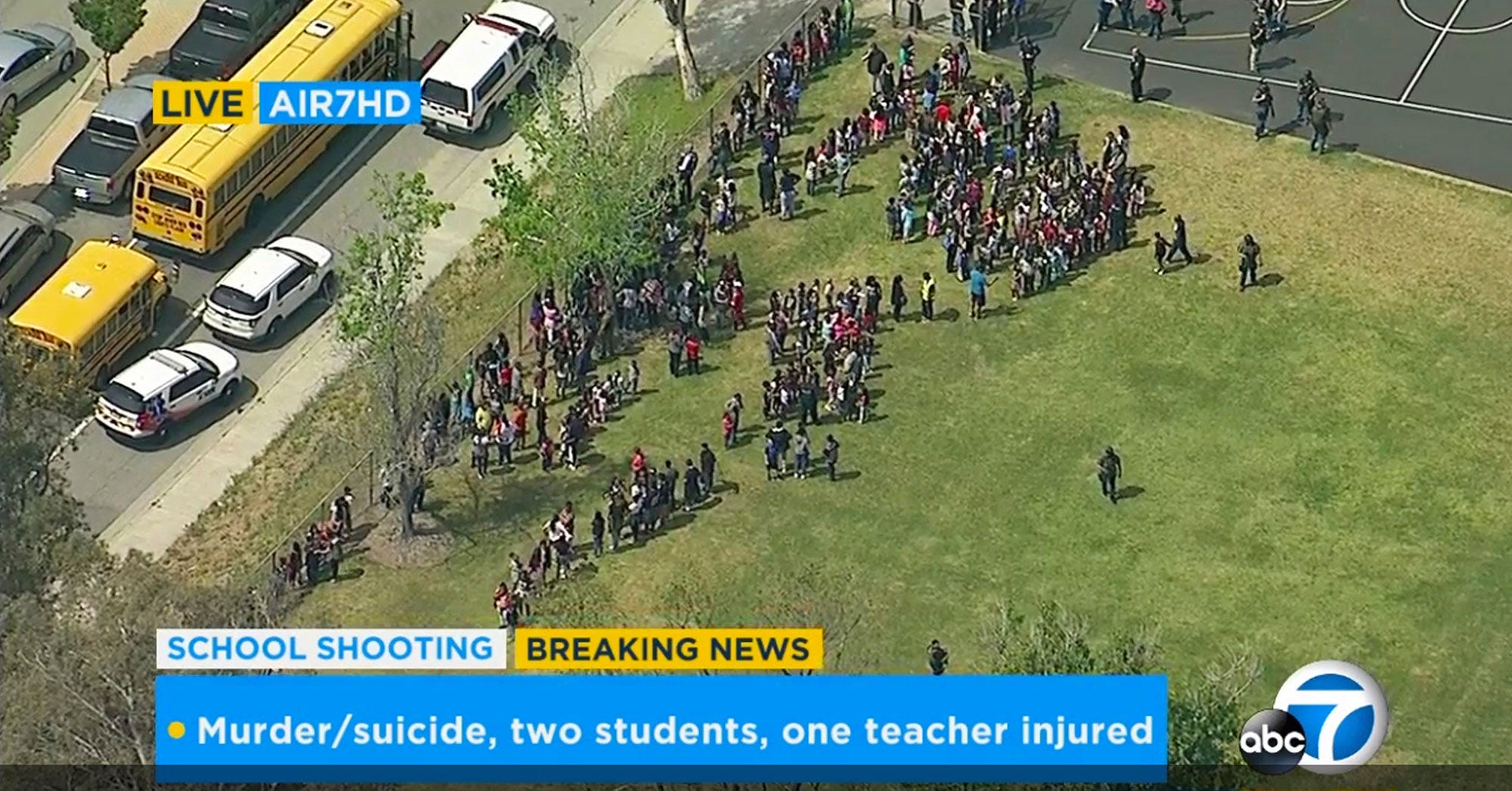
America has had 11 school shootings in the last 23 days. That's one every other day, more or less. That statistic is alarming enough — but it is just a number. Perspective asks us for comparison. So let me put that another way. America has had 11 school shootings in the last 23 days, which is more than anywhere else in the world, even Afghanistan or Iraq. In fact, the phenomenon of regular school shootings appears to be a unique feature of American collapse — it just doesn't happen in any other country — and that is what I mean by "social pathologies of collapse": a new, bizarre, terrible disease striking society.

Why are American kids killing each other? Why doesn't their society care enough to intervene? Well, probably because those kids have given up on life — and their elders have given up on them. Or maybe you're right — and it's not that simple. Still, what do the kids who aren't killing each other do? Well, a lot of them are busy killing themselves.

So there is of course also an "opioid epidemic". We use that phrase too casually, but it much more troubling than it appears on first glance. Here is what is really curious about it. In many countries in the world — most of Asia and Africa — one can buy all the opioids one wants from any local pharmacy, without a prescription. You might suppose then that opioid abuse as a mass epidemic would be a global phenomenon. Yet we don't see opioid epidemics anywhere but America — especially not ones so vicious and widespread they shrink life expectancy. So the "opioid epidemic" — mass self-medication with the hardest of hard drugs — is again a social pathology of collapse: unique to American life. It is not quite captured in the numbers, but only through comparison — and when we see it in global perspective, we get a sense of just how singularly troubled American life really is.

Why would people abuse opioids en masse unlike anywhere else in the world? They must be living genuinely traumatic and desperate lives, in which there is little healthcare, so they have to self-medicate the terror away. But what is so desperate about them? Well, consider another example: the "nomadic retirees". They live in their cars. They go from place to place, season after season, chasing whatever low-wage work they can find — spring, an Amazon warehouse, Christmas, Walmart.

Now, you might say — "well, poor people have always chased seasonal work!" But that is not really the point: absolute powerlessness and complete indignity is. In no other country I can see do retirees who should have been able to save up enough to live on now living in their cars in order to find work just to go on eating before they die — not even in desperately poor ones, where at least families live together, share resources, and care for one another. This is another pathology of collapse that is unique to America — utter powerlessness to live with dignity. Numbers don't capture it — but comparisons paint a bleak picture.

How did America's elderly end up cheated of dignity? After all, even desperately poor countries have "informal social support systems" — otherwise known as families and communities. But in America, there is the catastrophic collapse of social bonds. Extreme capitalism has blown apart American society so totally that people cannot even care for one another as much as they do in places like Pakistan and Nigeria. Social bonds, relationships themselves, have become unaffordable luxuries, more so than even in poor countries: this is yet another social pathology unique to American collapse.

Yet those once poor countries are making great strides. Costa Ricans now have higher life expectancy than Americans — because they have public healthcare. American life expectancy is falling, unlike nearly anywhere else in the world, save the UK — because it doesn't.

And that is my last pathology: it is one of the soul, not one of the limbs, like the others above. American appear to be quite happy simply watching one another die, in all the ways above. They just don't appear to be too disturbed, moved, or even affected by the four pathologies above: their kids killing each other, their social bonds collapsing, being powerless to live with dignity,or having to numb the pain of it all away.

If these pathologies happened in any other rich country — even in most poor ones — people would be aghast, shocked, and stunned, and certainly moved to make them not happen. But in America, they are, well, not even resigned. They are indifferent, mostly.

So my last pathology is a predatory society. A predatory society doesn't just mean oligarchs ripping people off financially. In a truer way, it means people nodding and smiling and going about their everyday business as their neighbours, friends, and colleagues die early deaths in shallow graves. The predator in American society isn't just its super-rich — but an invisible and insatiable force: the normalization of what in the rest of the world would be seen as shameful, historic, generational moral failures, if not crimes, becoming mere mundane everyday affairs not to be too worried by or troubled about.

Perhaps that sounds strong to you. Is it?

Now that I've given you a few examples — there are many more — of the social pathologies of collapse, let me share with you the three points that they raise for me.

These social pathologies are something like strange and gruesome new strains of disease infecting the body social. America has always been a pioneer — only today, it is host not just to problems not just rarely seen in healthy societies — it is pioneering novel social pathologies have never been seen in the modern world outside present-day America, period. What does that tell us?

American collapse is much more severe than we suppose it is. We are underestimating its magnitude, not overestimating it. American intellectuals, media, and thought doesn't put any of its problems in global or historical perspective — but when they are seen that way, America's problems are revealed to be not just the everyday nuisances of a declining nation, but something more like a body suddenly attacked by unimagined diseases.

Seen accurately. American collapse is a catastrophe of human possibility without modern parallel . And because the mess that America has made of itself, then, is so especially unique, so singular, so perversely special — the treatment will have to be novel, too. The uniqueness of these social pathologies tell us that American collapse is not like a reversion to any mean, or the downswing of a trend. It is something outside the norm. Something beyond the data. Past the statistics. It is like the meteor that hit the dinosaurs: an outlier beyond outliers, an event at the extreme of the extremes. That is why our narratives, frames, and theories cannot really capture it — much less explain it. We need a whole new language — and a new way of seeing — to even begin to make sense of it.

But that is America's task, not the world's. The world's task is this. Should the world follow the American model — extreme capitalism, no public investment, cruelty as a way of life, the perversion of everyday virtue — then these new social pathologies will follow, too. They are new diseases of the body social that have emerged from the diet of junk food — junk media, junk science, junk culture, junk punditry, junk economics, people treating one another and their society like junk — that America has fed upon for too long.

Umair
January 2018


Monday, February 19, 2018

ANS -- Five Activism Suggestions That Worked: When Your Representatives Don't Listen

Activism is working when it is focused and strategic.  "Indivisible" was one of the best things that ever happened to politics.  
--Kim


Five Activism Suggestions That Worked: When Your Representatives Don't Listen

Monday, February 19, 2018By Ilana Novick, AlterNet | Op-Ed

Nearly every Friday since Trump took office, constituents of longtime Congressman Rodney Frelinghuysen (R-NJ) took time out of their busy lives to visit his Morristown, New Jersey office to encourage him to protect Obamacare, to vote no on a GOP tax plan, and most importantly, to hold a town hall meeting (which it seemed like he bent over backward to avoid). Members of this tireless group, NJ 11th for Change, a branch of the Indivisible movement, never did get that town hall, but their tenacity may have landed them something better: his retirement. 

Frelinghuysen, who served as the chair of the House Committee on Appropriations, announced recently that he would not seek reelection in New Jersey's 11th congressional district. He is the eighth long-serving Republican to call it quits in the lead-up to the 2018 midterm elections, and the second in the last week, after Patrick Meehan of Pennsylvania. Unlike Meehan, and fellow retiree Blake Farenthold, sexual harassment allegations didn't push Frelinghuysen out the door. It was activism.

"Frelinghuysen won his last election by 19 points, but by this November, his race had been called a tossup," Elizabeth Juviler, a co-executive director of NJ 11th for Change, told AlterNet. "That was the power of people's voices in a classically democratic process. People spoke up, they were heard, and our institutions and government are changing as a result. It's a shame that Frelinghuysen refused to hear our voices until it was too late for him." 

The group started in 2016, and in January 2017, Fridays Without Frelinghuysen, as their visits to his office became known, gained the group so much notoriety that one of Juviler's fellow co-directors, Saily Avelenda, lost her job. Frelinghuysen himself sent an article about the group to the board of the bank where she was senior vice president and assistant general counsel. On the back, he wrote, "One of the ringleaders works at your bank!" Despite this setback, Avelenda told local paper the Morristown Green that Monday's announcement was a win "for all those people who stood in the rain, the cold, the crazy heat, every Friday."

Juviler spoke to AlterNet about her experiences as a new activist, and offered a few tips for sustainability and long-term success.

1. Have a clear mission and focus.

NJ 11th for Change's goal was to force Frelinghuysen to hold a town hall. 

Juviler says:

"I think the biggest tip is that we had a mission that was exciting and welcoming to a broad group of people, but laser-focused at the same time. We are nonpartisan. We are unaffiliated with any party, though eventually we were campaigning against Frelinghuysen.

"We have tried as hard as possible to maintain deeply supportive, friendly, forward-thinking culture within the group, particularly on our Facebook group, which is the main social hangout. There's no question we benefited from a targeted focus on congressional representation rather than getting too far off into any one issue. We were confident that so many other groups were active on issues and watching senators and involved with legislative policy within the state... that we could keep our tent wide and our path narrow."

2. Diversify your tactics.

While your mission should be crystal-clear, sometimes the methods you use to carry it out will have to change, and it's important to be flexible.

Juviler explains:

"In the beginning, Fridays [Without Frelinghuysen] provided a huge amount of energy and focus. People took time off work, issue groups gathered, civic groups gathered -- but when it became clear that Rodney would never meet with us, and when his votes consistently betrayed his district's interests, we moved on to other activities."

3. Be hyper-local.

There's a reason the Tea Party's damage to our democracy has been so long-lasting. When Obama was in office, they didn't just direct their ire at the president, but at all of their representatives. Tea Party groups went to town hall meetings (although Frelinghuysen didn't give constituents that opportunity).

Juviler says:

"We started town teams in most of the towns within the district, and both teams carried out all kinds of activities like tabling at farmers markets and street fairs, having issue educational meetings at the library, etc. These hyper-local groups are able to speak to their neighbors about the things our neighbors most care about in a way that resonates, and we found this extremely effective...

"We were local, visible, persistent and effective opposition to his status quo of entitled representation."

4. Do your research and learn your representative's history.

It will help you better plan your strategy and fight back against attacks. Juviler says NJ 11th for Change did this, "and he didn't know how to handle it."

Juviler recalls the ethics complaints filed after Frelinghuysen got Saily Avelenda fired:

"[I]t was not only a terrible error in strategy, but pretty terrible period....He really expected we would fade away, and when we didn't, he'd already dismissed us, refused to meet with us in such silly public ways. And meanwhile, his voting record [showed he was] beholden to Paul Ryan in obvious ways [that] went against most of his constituents' desires."

5. Don't forget to celebrate the small victories.

Juviler recalls:

"One of the most amazing moments was at the end of March [2017], when the AHCA was due for a vote on a Friday, but before noon Frelinghuysen had announced that he could not support the bill. We turned our regular Friday meeting with his staff into a celebration. It was the first big sense that we regular people could together make a big difference on our government."

As for next steps, Juviler says despite Frelinghuysen's resignation, the group's plans remain largely the same. Until he's gone, they will continue to be "focused on educating constituents about Rodney's record and how it affects them."

"There is still a lot of bad policy coming out us from Washington," she continued, "and we will see how Republican candidates lineup, if they have been silent about the despicable things that are happening to New Jersey and the country or if they have a backbone."

The group is also looking toward the midterm elections. NJ 11th for Change is so far declining to endorse anyone in the primaries, but noted, "We already have an excellent field of candidates. We still are working to get an excellent representative into Congress from the 11th District, one who will advocate for us, be responsive, transparent, and accountable. One hurdle is behind us, but the goal still lies ahead."

This piece was reprinted by Truthout with permission or license. It may not be reproduced in any form without permission or license from the source.