Sunday, June 07, 2020

ANS -- The Trump Regime Is Beginning to Topple

This is political, but it's hopeful.  I thought it was interesting because it is about HOW regimes crumble.  
--Kim


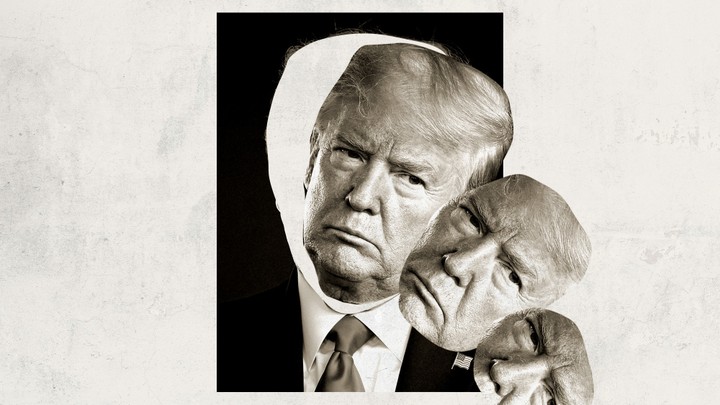
The Trump Regime Is Beginning to Topple

GETTY / ARSH RAZIUDDIN / THE ATLANTIC

Updated at 12:04 p.m. on June 6, 2020

Over the course of his presidency, Donald Trump has indulged his authoritarian instincts—and now he's meeting the common fate of autocrats whose people turn against them. What the United States is witnessing is less like the chaos of 1968, which further divided a nation, and more like the nonviolent movements that earned broad societal support in places such as Serbia, Ukraine, and Tunisia, and swept away the dictatorial likes of Milošević, Yanukovych, and Ben Ali.


And although Trump's time in office will end with an election and not an ouster, it is only possible to grasp the magnitude of what we're seeing and to map what comes next by looking to these antecedents from abroad.

As in the case of many such revolutions, two battles are being waged in America. One is a long struggle against a brutal and repressive ideology. The other is a narrower fight over the fate of a particular leader. The president rose to power by inflaming racial tensions. He now finds his own fate enmeshed in the struggle against police brutality and racism.

The most important theorist of nonviolent revolutions is the late political scientist Gene Sharp. A conscientious objector during the Korean War who spent nine months in prison, Sharp became a close student of Mahatma Gandhi's struggles. His work set out to extract the lessons of the Indian revolt against the British. He wanted to understand the weaknesses of authoritarian regimes—and how nonviolent movements could exploit them. Sharp distilled what he learned into a 93-page handbook, From Dictatorship to Democracy, a how-to guide for toppling autocracy.


Sharp's foundational insight is embedded in an aphorism: "Obedience is at the heart of political power." A dictator doesn't maintain power on his own; he relies on individuals and institutions to carry out his orders. A successful democratic revolution prods these enablers to stop obeying. It makes them ashamed of their complicity and fearful of the social and economic costs of continued collaboration.

Sharp posited that revolutionaries should focus first on the regime's softest underbelly: the media, the business elites, and the police. The allegiance of individuals in the outer circle of power is thin and rooted in fear. By standing strong in the face of armed suppression, protesters can supply examples of courage that inspire functionaries to stop carrying out orders, or as Sharp put it, to "withhold cooperation." Each instance of resistance provides the model for further resistance. As the isolation of the dictators grows—as the inner circles of power join the outer circle in withholding cooperation—the regime crumbles.

This is essentially what transpired in Ukraine in 2014. When the country's president backed away from plans to join the European Union, a crowd amassed in Kyiv's central square, the Maidan. The throngs initially had no avowed intention or realistic hope of overthrowing the kleptocratic president, Viktor Yanukovych. But instead of letting the demonstrators shout themselves hoarse in the thick of subfreezing winter, Yanukovych set about violently confronting them. This tactic backfired horribly. A movement with limited aims became a full-blown revolution. Oligarchs quietly slunk away from a leader they had long subsidized. Lackeys who had faithfully served the regime resigned, for fear of attracting the public's ire. In the bitter end, Yanukovych found himself isolated, alone with his own family and his Russian advisers, destined for exile.

It is astonishing how events in the U.S., despite all the obvious imperfections of the analogy, have traced the early phases of this history. This is observable in the images of the crowds on successive nights, as Trump's violent suppression of the protests in Lafayette Square has only caused their ranks to swell. And it's possible to see how elites, in the course of just a few days, have begun to withhold cooperation, starting with the outer circles of power and quickly turning inward.

Twitter's decision to label Trump's posts as misleading was a hinge moment. For years, the company had provided the president with a platform for propaganda and a mechanism for cowing his enemies, a fact that long irked both critics outside Twitter and employees within. Only when Trump used Twitter to threaten violence against the protests did the company finally limit the ability of users to see or share a tweet.


Once Twitter applied its rules to Trump—and received accolades for its decision—it inadvertently set a precedent. The company had stood strong against the bully, and showed that there was little price to pay for the choice. A large swath of S&P 500 companies soon calculated that it was better to stand in solidarity with the protests, rather than wait for their employees to angrily pressure them to act.

A cycle of noncooperation was set in motion. Local governments were the next layer of the elite to buck Trump's commands. After the president insisted that governors "dominate" the streets on his behalf, they roundly refused to escalate their response. Indeed, New York and Virginia rebuffed a federal request to send National Guard troops to Washington, D.C.* Even the suburb of Arlington, Virginia, pulled its police that had been loaned to control the crowd in Lafayette Square.

As each group of elites refused Trump, it became harder for the next to comply in good conscience. In Sharp's taxonomy, the autocrat's grasp on power depends entirely on the allegiance of the armed forces. When the armed forces withhold cooperation, the dictator is finished. Of course, the U.S. is far more democratic than the regimes Sharp studied and doesn't fit his taxonomy neatly. But on Wednesday, the president's very own secretary of defense explicitly rejected Trump's threat to deploy active-duty military officers to American streets. It's among the most striking instances of an official bucking a president in recent decades.

The examples of Serbia, Ukraine, and Tunisia show how even the subservient unexpectedly break from a leader once that leader is doomed to illegitimacy. And to an extent, the cycle of abandonment has already begun. Jim Mattis's excoriation of his old boss prodded Trump's former chief of staff John Kelly and Senator Lisa Murkowski of Alaska to echo his condemnation of the president.** As each defector wins praise for moral courage, it incentivizes the next batch of defectors.

Even if the protests fizzle—and the parade of denunciations comes to an end—it's worth pausing to marvel at the moment. Despite the divisions of the country, a majority of its people joined together in shared abhorrence of the president, at least for an instant. Sectors of society that studiously avoid politics broke with their reticence. In a dark era, when it seemed beyond the moral capacities of the nation, it mustered the will to disobey.


* An earlier version of this article incorrectly included Maryland among the states that have rebuffed a request to send National Guard troops to Washington, D.C.

** This article previously misstated the first name of former White House chief of staff John Kelly.


We want to hear what you think about this article. Submit a letter to the editor or write to letters@theatlantic.com.

FRANKLIN FOER is a staff writer at The Atlantic. He is the author of World Without Mind and How Soccer Explains the World: An Unlikely Theory of Globalization.

Saturday, June 06, 2020

ANS -- Who Exactly Is Doing the Looting, and Who’s Being Looted?

this article is from David Sirota.  Short and not-so-sweet.  It's a summary of the government giveaways that went the wrong direction.  
Find it here:  Who Exactly Is Doing the Looting, and Who's Being Looted? 


--Kim


Who Exactly Is Doing the Looting, and Who's Being Looted?

We live in an Orwellian era, in which working-class people pilfering convenience store goods is called "looting." Rich people stealing hundreds of billions of dollars, on the other hand, is just well-functioning "public policy."

The view on Wall Street on May 26. (Spencer Platt / Getty Images)


Headlines this morning are all about looting — specifically, looting in Minneapolis, after the police killing of an unarmed African-American man was caught on video. In the modern vernacular, that word "looting" is loaded — it comes with all sorts of race and class connotations. And we have to understand that terms like "looting" are an example of the way our media often imperceptibly trains us to think about economics, crime, and punishment in specific and skewed ways.

Working-class people pilfering convenience-store goods is deemed "looting." By contrast, rich folk and corporations stealing billions of dollars during their class war is considered good and necessary "public policy" — aided and abetted by arsonist politicians in Washington lighting the crime scene on fire to try to cover everything up.

To really understand the deep programming at work here, consider how the word "looting" is almost never used to describe the plundering that has become the routine policy of our government at a grand scale that is far larger than a vandalized Target store.

Indeed, if looting is defined in the dictionary as "to rob especially on a large scale" using corruption, then these are ten examples of looting that we rarely ever call "looting":

  1. "The Fed Bailed Out the Investor Class": "Thanks to this massive government subsidy, large companies like Boeing and Carnival Cruises were able to avoid taking money directly — and sidestep requirements to keep employees on."
  2. "Millionaires To Reap 80% of Benefit From Tax Change In Coronavirus Stimulus": "The change — which alters what certain business owners are allowed to deduct from their taxes — will allow some of the nation's wealthiest to avoid nearly $82 billion of tax liability in 2020."
  3. "Stealth Bailout' Shovels Millions of Dollars to Oil Companies": "A provision of the $2.2 trillion stimulus law gives [companies] more latitude to deduct recent losses. . . . The change wasn't aimed only at the oil industry. However, its structure uniquely benefits energy companies that were raking in record profits."
  4. "The Tax-Break Bonanza Inside the Economic Rescue Package": "As part of the economic rescue package that became law last month, the federal government is giving away $174 billion in temporary tax breaks overwhelmingly to rich individuals and large companies."
  5. "Wealthiest Hospitals Got Billions in Bailout for Struggling Health Providers": "Twenty large chains received more than $5 billion in federal grants even while sitting on more than $100 billion in cash."
  6. "Airlines Got the Sweetest Coronavirus Bailout Around": "The $50 billion the government is using to prop up the industry is a huge taxpayer gift to shareholders."
  7. "Large, Troubled Companies Got Bailout Money in Small-Business Loan Program": "The so-called Paycheck Protection Program was supposed to help prevent small companies from capsizing as the economy sinks into what looks like a severe recession. . . . But dozens of large but lower-profile companies with financial or legal problems have also received large payouts under the program."
  8. "Public Companies Received $1 Billion Meant For Small Businesses": "Recipients include 43 companies with more than 500 workers, the maximum typically allowed by the program. Several other recipients were prosperous enough to pay executives $2 million or more."
  9. "Firms That Left U.S. to Cut Taxes Could Qualify for Fed Aid": "Companies that engaged in so-called corporate inversion transactions while maintaining meaningful U.S. operations appear to be eligible for two new programs."
  10. "The K Street Bailout": "Lobbyists already got bailed out, in effect, when corporations got bailed out. This is kind of the ultimate in double dipping; corporations are nursed back to health by the sheer force of Federal Reserve commitments, this allows them to keep their lobbying expenses up, and then lobbyists lobby for free money for themselves."

This looting is having a real-world effect: as half a billion people across the globe could be thrown into poverty and as 43 million Americans are projected to lose their health care coverage, CNBC reports that "America's billionaires saw their fortunes soar by $434 billion during the U.S. lockdown between mid-March and mid-May."

Apparently, though, all of that pillaging is not enough. The looting is now getting even more brazen: President Trump is floating a new capital gains tax cut for the investor class, while the New York Times


 notes that House speaker Nancy Pelosi's new proposal "to retroactively lift a limit on state and local tax deductions would largely funnel money to relatively high earners."

We don't call this "looting" because it is being done quietly in nice marbled office buildings in Washington and New York.

We don't call this "looting" because the looters wear designer suits and are very polite as they eagerly steal everything not nailed down to the floor.

We don't call this "looting," but we should — because it is tearing apart our nation's social fabric, laying waste to our economy, and throwing our entire society into chaos.


Friday, June 05, 2020

ANS -- Coronavirus May Be a Blood Vessel Disease, Which Explains Everything

Here's a scientific article about CV-19 that posits a new interpretation of what kind of a disease it is -- which leads to a possible new way to deal with it.  
--Kim


Coronavirus May Be a Blood Vessel Disease, Which Explains Everything

Many of the infection's bizarre symptoms have one thing in common

Dana G Smith
May 28 · 8 min read
Image: MR.Cole_Photographer/Getty Images

InApril, blood clots emerged as one of the many mysterious symptoms attributed to Covid-19, a disease that had initially been thought to largely affect the lungs in the form of pneumonia. Quickly after came reports of young people dying due to coronavirus-related strokes. Next it was Covid toes — painful red or purple digits.

What do all of these symptoms have in common? An impairment in blood circulation. Add in the fact that 40% of deaths from Covid-19 are related to cardiovascular complications, and the disease starts to look like a vascular infection instead of a purely respiratory one.

Months into the pandemic, there is now a growing body of evidence to support the theory that the novel coronavirus can infect blood vessels, which could explain not only the high prevalence of blood clots, strokes, and heart attacks, but also provide an answer for the diverse set of head-to-toe symptoms that have emerged.

"All these Covid-associated complications were a mystery. We see blood clotting, we see kidney damage, we see inflammation of the heart, we see stroke, we see encephalitis [swelling of the brain]," says William Li, MD, president of the Angiogenesis Foundation. "A whole myriad of seemingly unconnected phenomena that you do not normally see with SARS or H1N1 or, frankly, most infectious diseases."

"If you start to put all of the data together that's emerging, it turns out that this virus is probably a vasculotropic virus, meaning that it affects the [blood vessels]," says Mandeep Mehra, MD, medical director of the Brigham and Women's Hospital Heart and Vascular Center.

In a paper published in April in the scientific journal The Lancet, Mehra and a team of scientists discovered that the SARS-CoV-2 virus can infect the endothelial cells that line the inside of blood vessels. Endothelial cells protect the cardiovascular system, and they release proteins that influence everything from blood clotting to the immune response. In the paper, the scientists showed damage to endothelial cells in the lungs, heart, kidneys, liver, and intestines in people with Covid-19.

"The concept that's emerging is that this is not a respiratory illness alone, this is a respiratory illness to start with, but it is actually a vascular illness that kills people through its involvement of the vasculature," says Mehra.

A respiratory virus infecting blood cells and circulating through the body is virtually unheard of.

A one-of-a-kind respiratory virus

SARS-CoV-2 is thought to enter the body through ACE2 receptors present on the surface of cells that line the respiratory tract in the nose and throat. Once in the lungs, the virus appears to move from the alveoli, the air sacs in the lung, into the blood vessels, which are also rich in ACE2 receptors.

"[The virus] enters the lung, it destroys the lung tissue, and people start coughing. The destruction of the lung tissue breaks open some blood vessels," Mehra explains. "Then it starts to infect endothelial cell after endothelial cell, creates a local immune response, and inflames the endothelium."

A respiratory virus infecting blood cells and circulating through the body is virtually unheard of. Influenza viruses like H1N1 are not known to do this, and the original SARS virus, a sister coronavirus to the current infection, did not spread past the lung. Other types of viruses, such as Ebola or Dengue, can damage endothelial cells, but they are very different from viruses that typically infect the lungs.

Benhur Lee, MD, a professor of microbiology at the Icahn School of Medicine at Mount Sinai, says the difference between SARS and SARS-CoV-2 likely stems from an extra protein each of the viruses requires to activate and spread. Although both viruses dock onto cells through ACE2 receptors, another protein is needed to crack open the virus so its genetic material can get into the infected cell. The additional protein the original SARS virus requires is only present in lung tissue, but the protein for SARS-CoV-2 to activate is present in all cells, especially endothelial cells.

"In SARS1, the protein that's required to cleave it is likely present only in the lung environment, so that's where it can replicate. To my knowledge, it doesn't really go systemic," Lee says. "[SARS-CoV-2] is cleaved by a protein called furin, and that's a big danger because furin is present in all our cells, it's ubiquitous."

Endothelial damage could explain the virus' weird symptoms

An infection of the blood vessels would explain many of the weird tendencies of the novel coronavirus, like the high rates of blood clots. Endothelial cells help regulate clot formation by sending out proteins that turn the coagulation system on or off. The cells also help ensure that blood flows smoothly and doesn't get caught on any rough edges on the blood vessel walls.

"The endothelial cell layer is in part responsible for [clot] regulation, it inhibits clot formation through a variety of ways," says Sanjum Sethi, MD, MPH, an interventional cardiologist at Columbia University Irving Medical Center. "If that's disrupted, you could see why that may potentially promote clot formation."

Endothelial damage might account for the high rates of cardiovascular damage and seemingly spontaneous heart attacks in people with Covid-19, too. Damage to endothelial cells causes inflammation in the blood vessels, and that can cause any plaque that's accumulated to rupture, causing a heart attack. This means anyone who has plaque in their blood vessels that might normally have remained stable or been controlled with medication is suddenly at a much higher risk for a heart attack.

"Inflammation and endothelial dysfunction promote plaque rupture," Sethi says. "Endothelial dysfunction is linked towards worse heart outcomes, in particular myocardial infarction or heart attack."

Blood vessel damage could also explain why people with pre-existing conditions like high blood pressure, high cholesterol, diabetes, and heart disease are at a higher risk for severe complications from a virus that's supposed to just infect the lungs. All of those diseases cause endothelial cell dysfunction, and the additional damage and inflammation in the blood vessels caused by the infection could push them over the edge and cause serious problems.

The theory could even solve the mystery of why ventilation often isn't enough to help many Covid-19 patients breathe better. Moving air into the lungs, which ventilators help with, is only one part of the equation. The exchange of oxygen and carbon dioxide in the blood is just as important to provide the rest of the body with oxygen, and that process relies on functioning blood vessels in the lungs.

"If you have blood clots within the blood vessels that are required for complete oxygen exchange, even if you're moving air in and out of the airways, [if] the circulation is blocked, the full benefits of mechanical ventilatory support are somewhat thwarted," says Li.

A new paper published last week in the New England Journal of Medicine, on which Li is a co-author, found widespread evidence of blood clots and infection in the endothelial cells in the lungs of people who died from Covid-19. This was in stark contrast to people who died from H1N1, who had nine times fewer blood clots in the lungs. Even the structure of the blood vessels was different in the Covid-19 lungs, with many more new branches that likely formed after the original blood vessels were damaged.

"We saw blood clots everywhere," Li says. "We were observing virus particles filling up the endothelial cell like filling up a gumball machine. The endothelial cell swells and the cell membrane starts to break down, and now you have a layer of injured endothelium."

Finally, infection of the blood vessels may be how the virus travels through the body and infects other organs — something that's atypical of respiratory infections.

"Endothelial cells connect the entire circulation [system], 60,000 miles worth of blood vessels throughout our body," says Li. "Is this one way that Covid-19 can impact the brain, the heart, the Covid toe? Does SARS-CoV-2 traffic itself through the endothelial cells or get into the bloodstream this way? We don't know the answer to that."

In another paper that looked at nearly 9,000 people with Covid-19, Mehra showed that the use of statins and ACE inhibitors were linked to higher rates of survival.

If Covid-19 is a vascular disease, the best antiviral therapy might not be antiviral therapy

An alternative theory is that the blood clotting and symptoms in other organs are caused by inflammation in the body due to an over-reactive immune response — the so-called cytokine storm. This inflammatory reaction can occur in other respiratory illnesses and severe cases of pneumonia, which is why the initial reports of blood clots, heart complications, and neurological symptoms didn't sound the alarm bells. However, the magnitude of the problems seen with Covid-19 appear to go beyond the inflammation experienced in other respiratory infections.

"There is some increased propensity, we think, of clotting happening with these [other] viruses. I think inflammation in general promotes that," Sethi says. "Is this over and above or unique for SARS-CoV-2, or is that just because [the infection] is just that much more severe? I think those are all really good questions that unfortunately we don't have the answer to yet."

Anecdotally, Sethi says the number of requests he received as the director of the pulmonary embolism response team, which deals with blood clots in the lungs, in April 2020 was two to three times the number in April 2019. The question he's now trying to answer is whether that's because there were simply more patients at the hospital during that month, the peak of the pandemic, or if Covid-19 patients really do have a higher risk for blood clots.

"I suspect from what we see and what our preliminary data show is that this virus has an additional risk factor for blood clots, but I can't prove that yet," Sethi says.

The good news is that if Covid-19 is a vascular disease, there are existing drugs that can help protect against endothelial cell damage. In another New England Journal of Medicine paper that looked at nearly 9,000 people with Covid-19, Mehra showed that the use of statins and ACE inhibitors were linked to higher rates of survival. Statins reduce the risk of heart attacks not only by lowering cholesterol or preventing plaque, they also stabilize existing plaque, meaning they're less likely to rupture if someone is on the drugs.

"It turns out that both statins and ACE inhibitors are extremely protective on vascular dysfunction," Mehra says. "Most of their benefit in the continuum of cardiovascular illness — be it high blood pressure, be it stroke, be it heart attack, be it arrhythmia, be it heart failure — in any situation the mechanism by which they protect the cardiovascular system starts with their ability to stabilize the endothelial cells."

Mehra continues, "What we're saying is that maybe the best antiviral therapy is not actually an antiviral therapy. The best therapy might actually be a drug that stabilizes the vascular endothelial. We're building a drastically different concept."


Wednesday, June 03, 2020

Fwd: A small music-thon of virtual choirs & orchestras

Here's three musical pieces to help keep your spirits up.  The first one, "The Longest Time" has new words to go with today's life situation.  

---------- Forwarded message ---------
From: Janaia Donaldson
Date: Sun, May 31, 2020 at 8:46 PM
Subject: A small music-thon of virtual choirs & orchestras
To:


"The Longest Time - Quarantine Edition" virtual choir led us to two other songs that brought us to tears. We wanted to share with you these reflections of beauty and harmony arising as a counterpoint to this dark and challenging time.  ~Janaia & Robin

How Can I Keep From Singing? NYC Virtual Choir & Orchestra 

"You'll Never Walk Alone" Virtual Choir & Orchestra, 15 Countries: 300 people 

Tuesday, June 02, 2020

ANS -- The second pdf about single-payer health care

I apologize for these being PDFs.  I find them hard to work with.  but please read them.  This is the second of ten, it's just one page.  It's about how to pay for Medicare for All -- improved.
--Kim

ANS -- A note about health care

One of our readers asked me to pass these on.   there are ten of them, this is just the first one.  
--Kim

ANS -- How to end Rioting

this is a Facebook post by Brad Hicks.  Read it.  It's about how to end rioting.
--Kim


Fifty-two years ago, after a few really bad years for rioting, Congress appointed the Kerner Commission to find out why there were so many riots, and what could be done to stop them.
They were expected to recommend a law-and-order approach, more militarized policing. They were expected to recommend an educational and cultural effort to cure what everybody assumed was pathological "black culture."
Instead, after doing their research, the Kerner Commission concluded that black Americans were facing such horrifying conditions that if white Americans were treated the same way, they'd be rioting, too. So they said that the choice really was this stark. Either do the following two things ...
* Put real teeth into equal housing, lending, and employment law AND fully enforce it. And ...
* Reform every police and sheriff department in the US, and every jail and prison and court, to permanently remove everyone who is bigoted, bullying, or corrupt. Do both of those two things ...
Or else accept that the riots will erupt intermittently and will in all probability get worse.
A scant few months later, Richard Nixon got elected, in no small part because his platform was "we're not going to do those two things." Ever since then, that has been the platform of the Republican Party.
In 1992, Bill Clinton won the Democratic party primary and got elected president, in part by running on a platform of "we're not going to do those two things." Ever since then, that has been the platform of the Democratic Party. (Although I will grant that that may be turning around now.)
If you were EVER okay with that? You don't get to complain about the rioters. You chose this. And you could choose otherwise, and stop the riots, any time the majority wants to.